The Differences Between Ragdoll & Birman Cats
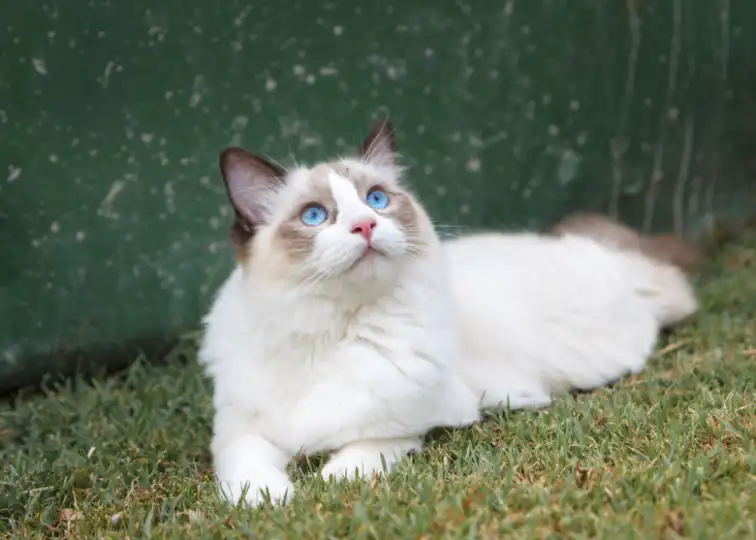
CatsCat BreedsThe Differences Between Ragdoll & Birman CatsByKatherine MaloneUpdated Apr 22, 2022silkenphotography/iStock/Getty Images #pce2e5c15f4475d89a5b8601482e9bb15, #pce2e5c15f4475d89a5b8601482e9bb15 img { aspect-ratio: 2050/1464; height: auto; }The Birman and ragdoll are similar cat breeds that may be difficult to differentiate at first glance. This makes sense since the Birman breed was used in breeding the first ragdoll cats. There are several differences between the two breeds, including differences in the breed standard, history, and health.Ragdoll vs. Birman historyRagdoll vs. Birman historyThe legend of the Birman cat is that they were raised in a temple in Birma by Kittah priests, and when their master died, his soul entered the cat, giving the Birman his beautiful coloring. However, there is no evidence that these cats originated in Birma. The breed can only be definitely traced back to 1920s France, and the cats were brought to the United States in the 1960s.Ragdoll cats were developed in the 1960s by Ann Baker of Riverside, California. As with the Birman breed, there is a bit of mystery as to the origins of the breed. While the foundation cats are believed to be known, Baker alleges that the breed came about after the foundation female cat's genes were altered after an accident.Birman and Ragdoll cat size comparisonLUIS JAVIER GASPAR FRAILE/iStock/Getty Images #p6fb8e600c750c2084e2de81df81177d8, #p6fb8e600c750c2084e2de81df81177d8 img { aspect-ratio: 3456/2304; height: auto; }Birman and Ragdoll cat size comparisonRagdoll cats are larger than Birman cats. Ragdolls are a large breed of cat with females weighing 10 to 15 pounds and males weighing 15 to 20 pounds. Male Birman cats also tend to be larger than female cats, but they are considered a medium-large breed with an average weight of about 12 pounds.Birman vs. ragdoll appearanceBirman vs. ragdoll appearanceWhile initially you may think there is little difference between the Birman and ragdoll cats, there are several differences in appearance that you can look for. Both breeds have blue eyes, long hair, and a pointed coat pattern. This coloring includes a light-colored body with darker coloring on the legs, tail, face, and ears.The Birman cat breed comes in all pointed colors, and they have distinctive white feet. The ragdoll also comes in all the pointed colors, and while some may have white feet, this is not required under the breed standard.Ragdoll cats also come in other colors and patterns, including a bicolor pattern with all white feet and legs and a mitted pattern with white front paws and hind legs and a white stripe from under the chin all the way down the underbelly. In addition, while both cats have silky hair, the ragdoll cat has a minimal undercoat, while the Birman does not have an undercoat.Birman cat vs. ragdoll temperamentBirman cat vs. ragdoll temperamentWhile breed is not a reliable indicator of temperament, there are some differences in personality to consider between the two breeds. Birman cats are described as lap cats who are both loyal and loving. They are laid back and friendly and will bask in any attention you or your guests may offer. They may spend most of their time in the laps of their owners, but that doesn't mean they aren't playful and curious. They love chasing toys when the mood strikes.ChrisRinckes/iStock/Getty Images #eb086827be42eeaee470d5678cc82dfc9, #eb086827be42eeaee470d5678cc82dfc9 img { display: block; aspect-ratio: 1.7780160857909Ragdoll cats are described as loving, social, and sweet. They live up to their name in that they will generally allow their body to go limp when you pick them up. They are quiet and affectionate and are very tolerant of other family members, including children and other pets.Birman and ragdoll healthBirman and ragdoll healthBirman cats are generally a very healthy breed. The International Cat Association does not list any genetic health problems for owners to be concerned about. With proper care, healthy cats can live for nine to 15 years or more.Ragdoll cats should be tested for hypertrophic cardiomyopathy. This is a common type of heart disease that may have a genetic component. The cats have a similar life expectancy as the Birman breed, living into their midteens or longer if they are healthy and receive proper care.ReferencesThe International Cat Association: The Birman BreedThe International Cat Association: The Ragdoll BreedCatster: Cat Colors — Get the Fascinating Facts Behind Cat Coats & PatternsThe International Cat Association: Birman Breed StandardThe International Cat Association: Ragdoll Breed Standard
How To Identify A Persian Cat
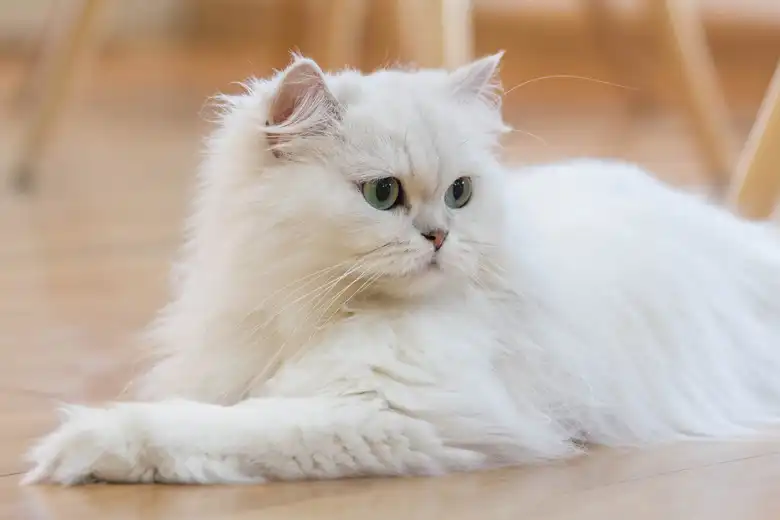
CatsCat BreedsHow To Identify A Persian CatByCatherine TroianoUpdated Apr 15, 2022rukawajung/iStock/GettyImages #p43b063cd9db04ecb96c5d68b7af3a536, #p43b063cd9db04ecb96c5d68b7af3a536 img { aspect-ratio: 5184/3456; height: auto; }One of the most easily recognized breeds in the feline world is the glamorous pure breed Persian cat, noted for her glorious long coat. The earliest evidence of a long-haired cat's existence appeared on ancient hieroglyphics. During the 1500s, Phoenician caravans moved toward Europe from Persia with long-haired cats in tow. By the 1800s, the Persian was named and exhibited in a cat show that took place at the Crystal Palace in London. Also during the 1800s, Persian cats had arrived in America, where they quickly soared in popularity.The Cat Fanciers Association officially recognized the Persian in 1871. Today, the Persian is the most popular cat registered by the Cat Fanciers Association.Snub nose Persian cat appearanceSnub nose Persian cat appearanceThe Persian is a medium- to large-sized cat with heavily boned, short legs, a plumed tail, a ruff around the neck, a round head, and small ears. The facial features include rounded cheeks, a short, snub nose, and large, round, expressive eyes. The Persian is clad in a long, silky coat that comes in a vast array of color and pattern choices. A Persian who is cast into the spotlight of Cat Fanciers Association show competitions is classified into one of seven color groups.The seven color groups include:Solid.Silver and golden.Shaded and smoke.Tabby.Parti-color.Bicolor.Himalayan.One of the most popular color choices is the Himalayan, with her jewel-toned blue eyes and rich color points that adorn her mask, ears, tail, and legs. The silver Persian is a perpetual favorite. Prospective owners of Persian cats must expect to engage in a daily grooming ritual to prevent the long locks from tangling and forming painful mats.Sweet and dignified temperamentalexey_ds/iStock/GettyImages #pfc710fce609a410facdee1055b2b719f, #pfc710fce609a410facdee1055b2b719f img { aspect-ratio: 5760/3840; height: auto; }Sweet and dignified temperamentThe Persian's expression accurately conveys her temperament. While breed is not a reliable indicator of temperament, the Persian tends to be quiet and gentle. Her regal and dignified appearance is exemplified as she adorns a sunny windowsill or the back of a sofa for hours. Persians emit a delicate meow, but they are not as vocal as some other cats.Their heavily boned and squat physiques influence their preference to remain grounded. They are not likely to soar and explore high places in the home. Persians are sweet, playful and affectionate. Although they are not demanding of attention, they are loving companions. Their intelligence and their charms delight their owners. Persians thrive best in calm households.Health and longevityHealth and longevityOne of the primary health concerns to which the Persian is prone is brachycephalic airway syndrome. This condition results from the snub nose Persian cat face. Brachycephalic airway syndrome places the Persian at a higher risk for upper respiratory infection and heatstroke.FluxFactory/iStock/GettyImages #ea6a935ee786895b69c443ddd27ecafef, #ea6a935ee786895b69c443ddd27ecafef img { display: block; aspect-ratio: 1.5Another health concern that afflicts Persian cats is polycystic kidney disease, a genetic condition in which one or both kidneys become infiltrated with cyst formations, ultimately resulting in kidney failure. Other health problems that have been noted in Persians include:A degenerative eye disease called progressive retinal atrophy.Bladder infections and bladder stones.Liver shunts.A heart condition called hypertrophic cardiomyopathy.Dental malocclusion.Blocked tear ducts.Reputable breeders screen their cats to prevent passing some of these conditions down their breeding lines. Barring any of these health problems, Persian cats who are kept indoors and receive regular veterinary checkups can live lengthy life spans of 15 to 20 years or more.ReferencesCat Fanciers Association: About the PersianVCA Animal Hospitals: Brachycephalic Airway Syndrome in Cats
Why Chinchilla Is One Of The Rarest Cat Colors (And The Breeds That Have This Unique Coat)
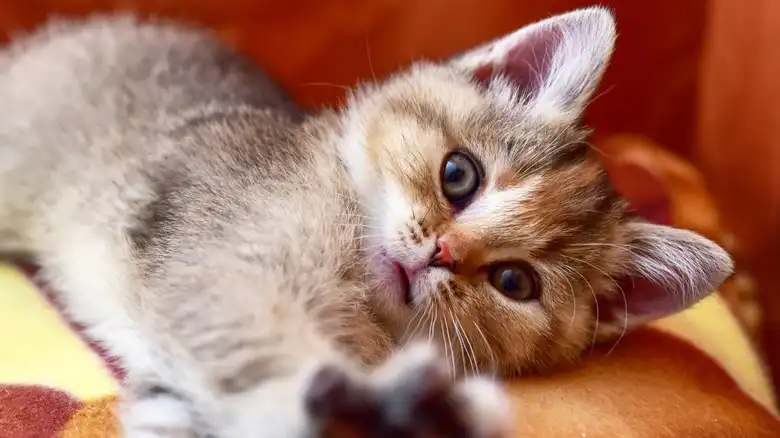
CatsCat BreedsWhy Chinchilla Is One Of The Rarest Cat Colors (And The Breeds That Have This Unique Coat)BySanaphay RattanavongFeb. 4, 2025 3:25 pm ESTMaksim Safaniuk/ShutterstockLike sunlight dancing on freshly fallen snow, the coats of chinchilla cats mesmerize feline enthusiasts the world over. Their rare coloring, named after the chinchilla rodent, shines with the same silvery elegance as the rodent's fur, as if nature used the same brush to paint both. This dazzling effect is achieved through a combination of specialized genetic traits. The melanin inhibitor gene keeps the base of each hair pure white. The wide-band gene softens tabby patterns, creating a delicate gradient of color at the tips. With each hair thus gradated like the edge of a shadow fading gently into light, we get the signature chinchilla effect. It also gives the fur a sparkle in shades of silver, gold, or black. The chinchilla coat's beauty is further enhanced by other distinctive features of the breeds that have it, such as the Persian and Maine coon. This includes their large, expressive eyes and their rounded faces with soft, gentle expressions.Breeds and breeding challenges of chinchilla catsJitka Kratochvilova/ShutterstockThe chinchilla coat pattern is most famously associated with Persian cats. Their luxurious fur highlights the shimmering silver or golden tips. This breed has a long history of captivating cat enthusiasts, not only for its stunning appearance but also for its distinct flat-faced look, which places them as a brachycephalic cat breed. However, the chinchilla pattern is not exclusive to Persian cat breeds. It is also recognized in British shorthairs, whose dense, plush coats beautifully showcase the sparkling silver effect. Additionally, the Burmilla breed — a hybrid of a Chinchilla Persian and a Burmese — shares a similar genetic heritage and showcases a comparable shimmering effect in its coat, making it a fascinating relative in the world of rare feline coat patterns.The genetic complexity behind this coat pattern is as intricate as trying to create a perfect gradient in a painting. Even small changes can lead to a different effect. The rarity of the coat color stems from the intricate genetics required to achieve it. Both parents must carry specific genes, including the melanin inhibitor gene and wide-band gene, which interact to produce the delicate tipping effect. Even then, not every kitten will inherit the exact pattern. This makes chinchilla cats not only striking to look at, but also a challenge to breed consistently. Smaller litter sizes, particularly in breeds like the Persian, further contribute to the chinchilla's rarity. These breeding challenges make it difficult to maintain the chinchilla pattern across generations. Whether in the luxurious Persian or the sturdy British shorthair, this shimmering pattern remains one of the rarest cat colorings most sought-after and admired among cat lovers.
Colorpoint Shorthair Cat Breed Characteristics
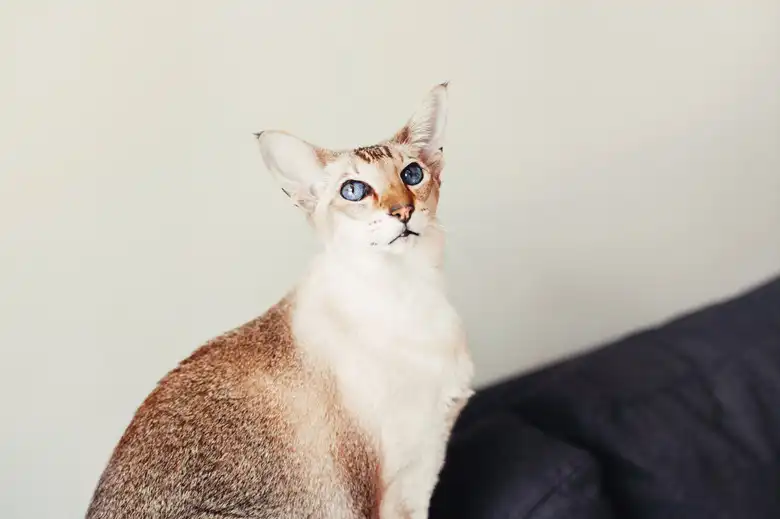
CatsCat BreedsColorpoint Shorthair Cat Breed CharacteristicsByKatherine MaloneFeb 22, 2023 12:03 pm ESTAnna Kraynova / EyeEm/EyeEm/GettyImages #pffd7c79e246b8fdd86e287102afb370b, #pffd7c79e246b8fdd86e287102afb370b img { aspect-ratio: 4955/3303; height: auto; } In This ArticleColorpoint shorthair quick factsColorpoint shorthair cat historyColorpoint shorthair cat personalityColorpoint shorthair cat lifespan & health issuesColorpoint shorthair cat grooming & careWelcoming a new catColorpoint shorthair quick factsColorpoint shorthair quick factsLength: 12 – 16 inchesWeight: Females: 5 – 8 pounds, Males 8 – 12 poundsLifespan: 12 – 16 yearsCoat length: ShortColoring: Colorpoint coat pattern with blue eyesMore Like ThisCatsEuropean Burmese Cats: Everything You Need to Know About This Affectionate BreedCatsKhao Manee Cat Breed CharacteristicsCatsBirman Cat Breed CharacteristicsGrooming needs: LowFriendliness: Breed alone is not an accurate predictor of individual cats' personalities. However, colorpoint shorthair cats are generally regarded as affectionate and loyal.The colorpoint shorthair is only distinguishable from the Siamese cat by their coloring. The breed comes in 16 different colors and patterns including lynx point and parti-color point. If you are looking for a beautiful, talkative cat that is both social and affectionate, the colorpoint shorthair may be a perfect choice. Be prepared to wait for a kitten, though, especially if you have your heart set on a certain coat color. Carefully consider the breed's care requirements and personality before committing to bringing a colorpoint shorthair into your home.~UserGI15613517/iStock/GettyImages #e59e87eb8c1c9bd89ead92c28ae0093e6, #e59e87eb8c1c9bd89ead92c28ae0093e6 img { display: block; aspect-ratio: 1.5Colorpoint shorthair cat historyColorpoint shorthair cat historyThe colorpoint shorthair cat breed was developed by breeding seal point Siamese with a red tabby American shorthair cat. The intention was to create a Siamese cat with red coloring. The match was successful and the Cat Fanciers' Association (CFA) granted championship status to red and cream points colorpoint shorthairs.While the Siamese cat comes in four basic colors, including seal point, chocolate point, blue point, or lilac point, there are 16 different colors and patterns currently recognized by the Association for the colorpoint shorthair breed. These include:solid point colors: cream point and red pointlynx point colors: blue, chocolate, cream, lilac, red, seal, blue cream, chocolate-tortoiseshell, lilac-cream, and seal-tortieparti-color point colors: seal-tortie point, chocolate-tortie point, blue-cream point, and lilac-cream pointThe ways different cat registries classify these cats vary. The Cat Fanciers' Association recognizes the colorpoint shorthair as a separate breed. Other registries, such as the International Cat Association (TICA), group these cats into the Siamese breed of cat.Due to their close relationship with Siamese cats, colorpoint shorthairs share much of the cat breed information. The cats have the same physical characteristics as the Siamese including a muscular body, wedge-shaped head, and almond-shaped eyes.Colorpoint shorthair cat personalityColorpoint shorthair cat personalityThe colorpoint shorthair shares some personality traits with their Siamese cousins. The breed tends to be talkative. They often meow and tend to have a voice that is a bit raspy. The cats are devoted to their family and may follow you around the home. They may even settle on your lap or by your side.They also enjoy playing and can easily be enticed into a game of fetch. The cats are also very intelligent and can be trained to do tricks or walk on a leash. Colorpoint shorthair cats enjoy warm environments and when they aren't snuggling up to you, they can often be found basking in the sun.The breed enjoys company and is very loyal. Therefore they shouldn't be left alone for long periods of time. If you live alone, work long hours, or travel frequently, this may not be the best breed of cat for you.Anna Kraynova / EyeEm/EyeEm/GettyImages #e2b54f21971c10508199fed8c9bc76ea9, #e2b54f21971c10508199fed8c9bc76ea9 img { display: block; aspect-ratio: 1.5Colorpoint shorthair cat lifespan and health issuesColorpoint shorthair cat lifespan and health issuesA healthy colorpoint shorthair has a long expected lifespan and can live 12 to 16 years. There are some genetic health problems that affect the breed. Like Siamese cats, colorpoint shorthairs may have crossed eyes or develop other types of eye disease such as progressive retinal atrophy or feline glaucoma.Some other hereditary conditions include:amyloidosisasthmacongenital heart defectsdental problemsResponsible cat breeders will have their cats tested and examined regularly and avoid breeding cats with health problems that may be passed on to their kittens.Colorpoint shorthair cat grooming and careColorpoint shorthair cat grooming and careColorpoint shorthair cats have short coats that are very low maintenance. They don't shed much, so weekly brushing is generally plenty to keep their coat healthy. While these cats shed less than some other breeds, they are not hypoallergenic.Make sure to also check and clean their eyes and ears and trim their nails regularly. As the breed may be more susceptible to dental problems, it is important to brush their teeth regularly with veterinarian-approved toothpaste.Feed them high-quality commercial cat food as recommended by your veterinarian. Obesity is a concern for colorpoint shorthair cats. Avoid free feeding and take time to play with your cat each day to keep them active. Provide fresh drinking water at all times.Take your cat in for regular veterinary checkups. These are important to make sure your cat isn't suffering from any undiagnosed health conditions and that they are maintaining a healthy weight. Make sure they get their recommended vaccinations as well.~UserGI15613517/iStock/GettyImages #ef07df174bca4c27526aff6200e5bd1a6, #ef07df174bca4c27526aff6200e5bd1a6 img { display: block; aspect-ratio: 1.5Welcoming a new cat into your homeWelcoming a new cat into your homeWhen bringing home a new colorpoint shorthair kitten or adult cat, it is important to take some time to set up your home to make sure it is safe for your new pet. Some cat-proofing steps include:removing any toxic plantslocking up mothballs and any toxic cleaning suppliessecuring fragile items that a curious cat may breakSet up a room where you can welcome your cat when they first arrive. The smaller space gives your cat the opportunity to adjust to the new environment. Set up the room with everything they need including food, water, and a litterbox. Make sure there is also a cat tree and scratching post so that they can scratch and climb without damaging your furniture.Colorpoint shorthairs are a social breed, so spend plenty of time in the room with your new cat. Don't rush them into exploring or bonding with you. Instead, offer to play, allow them to come to you when they are ready, and use plenty of positive reinforcement.This is a good time to introduce the new cat to children and any other pets you have in the household. Supervise the interactions and take a break if your cat becomes overwhelmed. When your cat is comfortable, you can open the door and allow your cat to have access to the rest of the house. With a bit of patience, your new colorpoint shorthair will be following you around the home — and telling you about their day.ReferencesAll About Cats: Colorpoint Shorthair CatCat Fanciers' Association: The Colorpoint Shorthair
How To Identify A Maine Coon
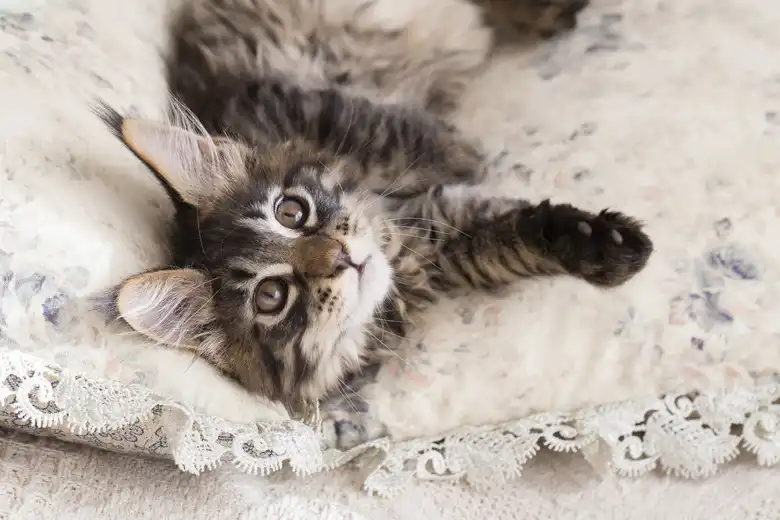
CatsCat BreedsHow To Identify A Maine CoonByKatherine MaloneUpdated Apr 22, 2022marilook/iStock/Getty Images #p45e8861c8fdb7e00d026b402ce422732, #p45e8861c8fdb7e00d026b402ce422732 img { aspect-ratio: 2122/1415; height: auto; }The Maine coon cat is not only the state cat of Maine but also one of the oldest North American cat breeds. There are some common Maine coon traits that will help you identify these cats, including their size, coat, and personality. It is possible that the cats got their name from the myth that the breed originated from a cross between a domestic cat and a raccoon. This is not biologically possible, but it does give you a good idea of what many of these beautiful cats look like.Maine coon cat characteristicsMaine coon cat characteristicsMaine coons are large, muscular cats with a long, rectangular body covered in long hair. Maine coon cats are slow to mature to their full size but should finish maturing by the age of 4. Male Maine coons weigh 18 to 22 pounds, while females of the breed weigh 12 to 15 pounds. They are a rugged breed and should be built to survive a Maine winter.Their legs are wide-set and their feet are large, tufted, and round. The cat's face features a square muzzle, high cheekbones, and wide-set, oval eyes. Eyes may be green, gold, green-gold, or copper in color, although white cats may have blue eyes. Their tufted ears have a wide base. The tail is long and fluffy and tapers toward the end.Maine coon cats should have five toes in the front and four toes in the back. However, there is a mutation that caused Maine coon cats to have an extra toe on their feet. The International Cat Association classifies these cats separately as Maine coon polydactyls.Maine coon cat colorsNatalya Vilman/iStock/GettyImages #pe53c37df09a3adc36c2013f4140fca64, #pe53c37df09a3adc36c2013f4140fca64 img { aspect-ratio: 3020/2000; height: auto; }Maine coon cat colorsThere are many colors of Maine coon cat accepted under the breed standard. In fact, no color is prohibited. The cats come in solid colors, including white, black, red, cream, and blue. Cream and white cats should have a pink nose and paw pads. Black cats should have a black or brown nose and pads. Red and blue cats should have brick red and blue noses and pads, respectively.Tabby patterning is common in the breed, and the most common coloring is a brown tabby. Bicolored cats are white combined with cream, blue, red, or black. Other coloring and patterns include tortoiseshell and calico, or they may have one of these color patterns combined with a white undercoat.The coat is described as heavy and shaggy, but the hair is silky. The hair is shorter on the shoulders and longer around the back. They have a frontal ruff and full belly fur. The frontal ruff may not be as apparent in younger cats but will continue to develop as the cats age.Maine coon cat personalityMaine coon cat personalityWhile breed is not a reliable indicator of temperament, Maine coon cats are generally described as gentle, friendly, and intelligent. In fact, their gentleness is sometimes a surprise due to their large size. They aren't generally lap cats, but they do prefer the company of their owners.They stay playful throughout their life, and unlike many other cat breeds, most enjoy the water. The cats are excellent swimmers, and the long hair of the Maine coon is water-resistant.Purple Collar Pet Photography/Moment/GettyImages #e8328fae1e96d430ae7f13ecf2125b757, #e8328fae1e96d430ae7f13ecf2125b757 img { display: block; aspect-ratio: 1.5002632964718Maine coon cats communicate vocally with their owners and when spotting prey. Rather than the meow you may expect from a cat, the Maine coon will often chirp or trill instead.ReferencesThe Cat Fanciers' Association: Maine Coon Cat Breed StandardThe International Cat Association: Maine Coon Polydactyl BreedThe International Cat Association: Maine Coon Cat Breed PresentationThe International Cat Association: The Maine Coon Breed
The Easy-To-Train Cat Breed That Acts Just Like A Dog (And Won't Leave You Alone)
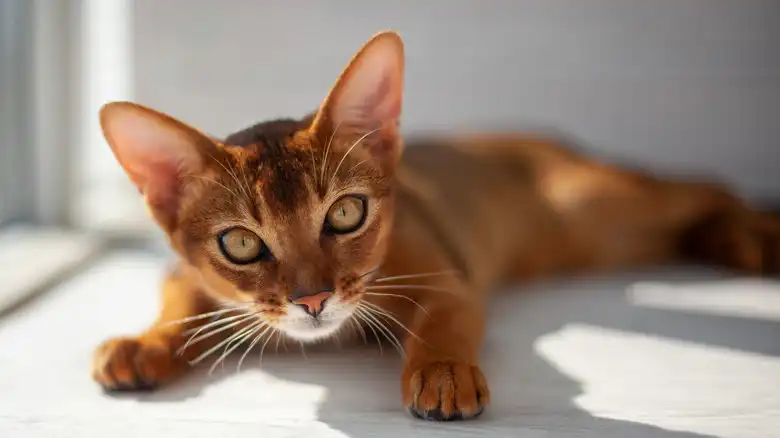
CatsCat BreedsThe Easy-To-Train Cat Breed That Acts Just Like A Dog (And Won't Leave You Alone)ByRosie GovinUpdated: Dec. 27, 2024 10:35 am ESTVera Chitaeva/Getty ImagesMost animal lovers know that if you want an affectionate companion who will love you unconditionally and follow you around the house always looking for your attention, a dog is the way to go. But if you like your independence and you want an animal who also enjoys some alone time, a cat is the perfect pet. And believe it or not, there are some cat breeds who can give you the best of both worlds.One of those breeds is the Abyssinian, also known as the Aby, a gorgeous, slender, medium-sized breed of unknown origin. Chief among Abyssinian cat breed characteristics is their extreme loyalty to their people, typically a more dog-like trait. Like many other cats, they're known to be very intelligent and independent. But unlike most other felines, Abyssinians are eager to please, curious, and enjoy attention, which makes them easy to train.They respond well to positive reinforcement, love to play games with their people, and are even well-suited to learning how to walk on a leash with a harness. The Aby is definitely one of the most dog-like cats you'll come across.Unlike many cats, Abyssinians crave attentionNataliabiruk/ShutterstockFor someone who loves the challenge of figuring out how to get a cat to like them, the Aby might be a great choice. A condition of the Abyssinians' traditional cat-like independence is that they may decide at any time that they want to cuddle up with you, and you have very little say in the matter. Many compare Abyssinian cats to dogs because they often want to interact with people and won't stop hounding you (notably, a word that evokes dogs!) until they get your attention. Yes, really!Like dogs, your Abyssinian will often follow you around the house, wanting to be involved in whatever you're doing. This is not a cat breed that enjoys being left alone at home for long stretches, so they might require a pet parent with a different lifestyle from the typical cat owner.However, unlike many dogs, Abyssinians don't enjoy being picked up, so it's important to let them come to you, first. Make sure children are taught not to reach for the cat, even if they seem cuddly and affectionate. Abyssinians want your attention, yes, but they want it on their own terms, like a typical cat. For some pet owners, the Abyssinian could provide the best of both animal worlds.Abyssinians are called the clowns of the cat kingdomDenis Ganenko / 500px/Getty ImagesCats aren't necessarily known as goofy pets, like many dogs are. But Abyssinians are an exception to the rule. These jokesters are known as the "clowns of the cat kingdom" because they love to perform tricks that their humans teach them, impress with feats of agility, and perch on their people's shoulders. They are easily bored, so they need lots of stimulation, toys, and playtime.There are many fascinating facts about Abyssinian cats, including that they will do things like flip your light switches, open cabinets, and push fragile objects off their surfaces. So if you have an Abyssinian, remember that it's probably your trickster cat, not a ghost messing with your home! Abyssinians won't be for everybody, but if you're a cat and dog lover who is up for a feisty, affectionate, trainable animal who will give you lots of love and needs lots of exercise and interaction — but only when they want it — it might be the right breed for you.
Peterbald Cats Are One Of The World's Rarest (And Friendliest) Breeds
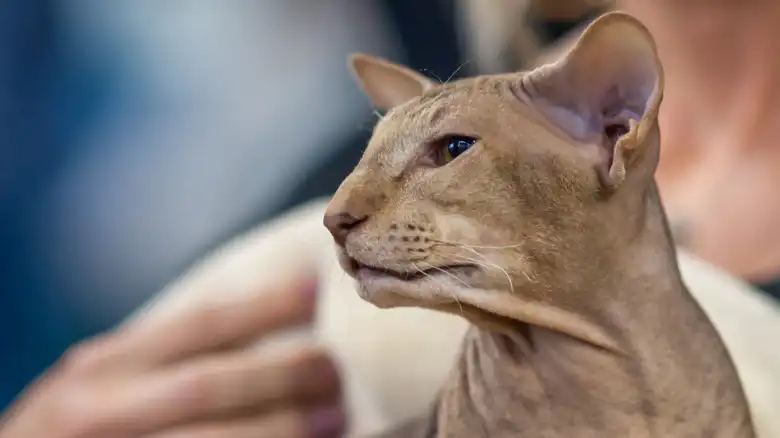
CatsCat BreedsPeterbald Cats Are One Of The World's Rarest (And Friendliest) BreedsBySanaphay RattanavongMarch 9, 2025 3:25 pm ESTJaroslaw Kurek/ShutterstockEver seen a cat that looks like a sleek, hairless panther and acts like a loyal puppy? Meet the Peterbald, a strikingly elegant and rare feline breed. Originating in St. Petersburg, Russia, in the 1990s, the Peterbald was created through an experimental cross between a Don Sphynx and an Oriental Shorthair. This unique combination resulted in a breed with a sleek, muscular frame, large expressive eyes, and a range of coat variations — from completely bald to soft, velvety fuzz. With a small global breeding population and selective breeding efforts to maintain their distinctive traits, the Peterbald remains one of the rarest cat breeds in the world — not to mention expensive, starting at roughly $1,700 up to $3,000 from reputable breeders. Unlike the more well-known Sphynx cat, the Peterbald's hairlessness comes from a dominant gene, meaning kittens can be born with a variety of coat types, including completely bald, "peach fuzz," or even short, wiry hair. Like humans, some Peterbalds even lose their fur over time. Physically, Peterbalds exude grace. They have long, tubular bodies, a slender neck, a whip-like tail, and a wedge-shaped head that adds to their refined appearance. Their large, low-set ears and oval paws with elongated toes enhance their almost otherworldly elegance that sets them apart from other hairless cat breeds.Due to their delicate, fur-free skin, Peterbalds require regular cleaning to prevent oil buildup, along with protection from sun exposure and cold temperatures. However, their devoted, affectionate nature more than makes up for their special care needs — these rare beauties form deep bonds with their humans, making them a favorite among dedicated cat lovers.A social butterfly in the feline worldPetr Malyshev/ShutterstockMost cats enjoy their independence, but Peterbalds break the mold. These affectionate felines thrive on companionship, often forming deep bonds with their owners. Some even follow their humans from room to room, seeking attention much like a devoted canine. Their social nature makes them one of the friendliest cat breeds, and they're known to get along well with children, other cats, and even dogs.Peterbalds are highly intelligent and playful, engaging in interactive games that stimulate both their minds and bodies. The different ways they play are often compared to those of an energetic puppy, and they love a variety of toys and climbing structures, and even learning tricks. Unlike some aloof felines, they actively seek out human interaction and can become distressed if left alone for long periods.Recent research has highlighted the heritable nature of behavioral traits in cats, revealing notable differences between breeds. A study published in Scientific Reports found that traits such as sociability and aggression have moderate heritability estimates, suggesting a genetic basis for these behaviors. While studies on Peterbalds specifically are limited, their well-documented affectionate and social nature aligns with this pattern. For those seeking a cat that is both devoted and interactive, the Peterbald may be the perfect companion.
Snowshoe Cat Breed Characteristics
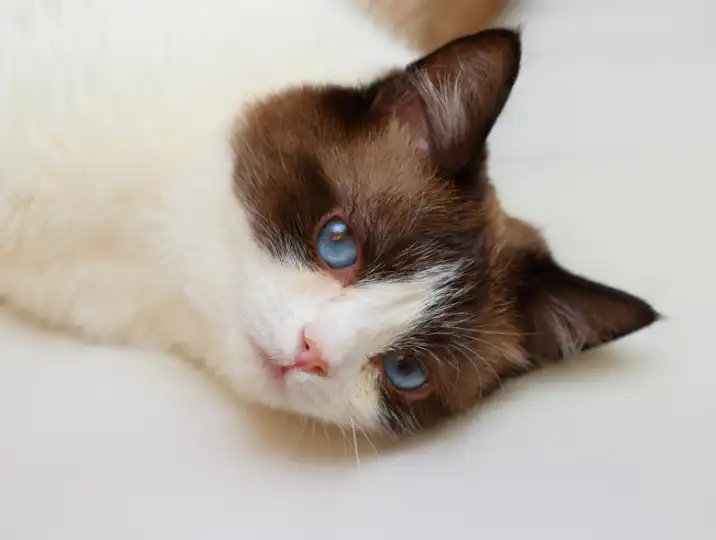
CatsCat BreedsSnowshoe Cat Breed CharacteristicsByKatherine MaloneNov 22, 2022 12:03 pm ESTMik122/iStock/GettyImages #p55b66a1895bf78c55368d332e652df2f, #p55b66a1895bf78c55368d332e652df2f img { aspect-ratio: 2825/2131; height: auto; } In This ArticleSnowshoe cat quick factsSnowshoe cat historySnowshoe cat personalitySnowshoe cat lifespan & health issuesSnowshoe cat grooming & careWelcoming a new catSnowshoe cat quick factsSnowshoe cat quick factsLength: 12 – 18 inchesWeight: Females: 7 – 10 pounds, males: 9 – 12 poundsLifespan: 5 – 20 years or moreCoat length: ShortColoring: Kittens are born white but they develop a colorpoint pattern after a few weeks. Adult cats have a pointed coat pattern, usually a seal point or blue point pattern, as well as white feet and blue eyes.More Like ThisCatsTonkinese Cat Breed CharacteristicsCatsBurmilla Cat Breed CharacteristicsCatsBirman Cat Breed CharacteristicsGrooming needs: LowFriendliness: Breed alone is not an accurate predictor of individual cats' personalities. However, snowshoe cats are generally regarded as playful and loyal.The snowshoe cat breed has a unique appearance with their beautiful colorpoint coat, blue eyes, and white mittens on all four paws. You may recognize the breed from famous cats like Dusty the Klepto Kitty and Burton the Cat. The most famous of all is Grumpy Cat, a mixed-breed cat who is likely part snowshoe. The cats make a wonderful choice for many people as they get along with all human and animal family members, but the breed isn't for everyone. Consider the snowshoe cat's personality and care requirements before deciding to bring a kitten into your family.Iuliia Alekseeva/iStock/GettyImages #e1fe8da97eb6bca5c0e661efbbee82f60, #e1fe8da97eb6bca5c0e661efbbee82f60 img { display: block; aspect-ratio: 1.504Snowshoe cat historySnowshoe cat historyThe snowshoe cat is a fairly new breed that was developed in the 1960s by Siamese cat breeder Dorothy Hinds Daugherty. She bred Siamese kittens and one of the litters had kittens with white paws. The white markings on the feet were considered a fault under the Siamese cat breed standard.She decided to develop what is now known as the snowshoe cat breed with a colorpoint coat pattern and four white feet. This was the result of breeding the cats with American shorthair cats that had tuxedo markings. Another breeder, named Vikki Olander, also played a large role in developing the Snowshoe cat breed.The unique coloring is the result of a recessive gene. Snowshoe kittens are born with a white coat and after a few weeks start developing a colorpoint pattern, which may not fully develop until the cat is two years old. Seal point and blue point are the most common coat colors, but some cats may also be lilac and chocolate. The cats have blue, walnut-shaped eyes.The snowshoe breed of cat was originally called silver lace. The breed is not recognized by the Cat Fanciers' Association (CFA). However the American Cat Fanciers Association (ACFA), Cat Fanciers Federation (CFF), and the International Cat Association (TICA) all recognize the breed.Snowshoe cat personalitySnowshoe cat personalitySnowshoe cats have personality traits from both their American shorthair and Siamese ancestors. They are playful, intelligent, and easy to train. You can teach them how to:walk on a leashplay fetchcomplete feline agility courses.Don't be surprised when they learn to open doors and cabinets. Be sure to use plenty of positive reinforcement to train the cats.Not only can you teach the snowshoe cat tricks, but the cats are also somewhat dog-like in that they love water. While many cats avoid getting wet at all costs, the snowshoe cat will happily jump in the sink or tub.Cats are also incredibly social and loyal. They generally get along will all members of the family, including children and other pets. Snowshoes are also quite vocal and will meow frequently. It is important that the snowshoe cat is not left alone for long periods of time as companionship is important to the breed's mental health and they may cause problems if they get bored and lonely.Iuliia Alekseeva/iStock/GettyImages #e57cc6bb433768734d72fd6d6cc5ec2d7, #e57cc6bb433768734d72fd6d6cc5ec2d7 img { display: block; aspect-ratio: 1.504Snowshoe cat lifespan and health issuesSnowshoe cat lifespan and health issuesHealthy snowshoe cats can live well into their teens and even 20s. The breed has few genetic health issues. In rare cases, cats may suffer from:hypertrophic cardiomyopathy: a heart condition that causes thickening of the heart wall. There is no cure for this disease, but the symptoms can be managed.polycystic kidney disease: a genetic condition that causes cysts to develop in the kidneys. It can be managed through diet, fluids, and medicine. However there is no cure for this disease.Like their Siamese ancestors, snowshoe cats may also be born with a kinked tail or crossed eyes. Fortunately, these are cosmetic issues that don't affect the cat's health or lifespan.Snowshoe cat grooming and careSnowshoe cat grooming and careThe snowshoe cat has a short coat that is easy to groom. Brush the cat about once per week. More frequent grooming can be beneficial when a cat is shedding their winter coat. Other grooming tasks include:trim the cat's nailscheck and clean the cat's earsbrush the cat's teeth with a toothpaste that is veterinarian approved for catsFeed a high-quality commercial cat food as recommended by your veterinarian and make sure the cat always has access to clean drinking water. Have regular playtime with a snowshoe cat to keep them sociable and healthy.Eva Lopez / EyeEm/EyeEm/GettyImages #e88107afba5c679524aad5d8cc57020c9, #e88107afba5c679524aad5d8cc57020c9 img { display: block; aspect-ratio: 1.5Welcoming a new cat into your homeWelcoming a new cat into your homeBefore bringing a new snowshoe kitten or cat into your home, make sure you cat-proof the home. This includes:remove poisonous plantssecure toxic cleaning suppliesput breakable objects in a safe locationpick up rubber bands and other small objects that can harm your cat if eatenThis is especially important for this intelligent and curious breed — they are likely to get into everything around the home. Set up a secure room where you can welcome your new and get them adjusted. Set up their food and water, litter box, cat tree, and scratching post to help make the room feel like home.Spend plenty of time in the room with your new cat, but be sure to allow the cat to explore on their own. When they are ready, they will come to you to cuddle or be petted. It is important not to rush the new cat. With patience and positive reinforcement, you will soon have a loving and trusting relationship with your new cat.If you have other pets in the home, allow them to smell and meet each other through the door or a baby gate. This ensures that both animals have a positive experience. In general, snowshoe cats get along with other pets.Once your new cat is comfortable with the new location and all of the members of the family, you can open the door and allow them access to more of the house. Before you know it, your loyal cat will be following you around the house — and talking to you throughout the day.ReferencesInternational Cat Association: Snowshoe at a GlanceAmerican Cat Fanciers Association: Snowshoe Breed StandardCornell University College of Veterinary Medicine: Cornell Feline Health Center – Hypertrophic CardiomyopathyVCA Animal Hospitals: Polycystic Kidney Disease in Cats
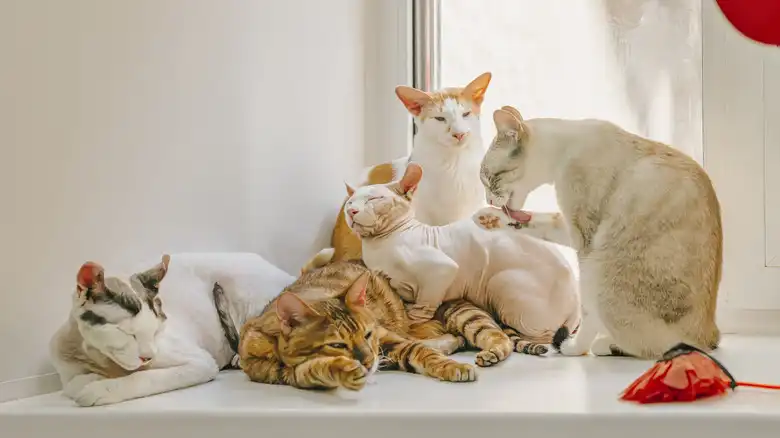
The Right Cat Breed For You, Based On Your Zodiac Sign
CatsCat BreedsThe Right Cat Breed For You, Based On Your Zodiac SignByColt DoddJan. 27, 2025 9:05 am ESTSvetlanais/Getty ImagesThere are many factors to consider when selecting the right cat for your home or family, from your budget to your living situation. But here's something that many feline fans may not consider in their search: matching a kitty's characteristics to their zodiac (or sun) sign. Astrologers believe that the positions of the sun, stars, and planets at the time of your birth can influence many aspects of your personality. "As human beings throughout eons, we've always been in the quest to understand our existence and make meaning of our lives," psychologist and astrologist Jennifer Freed, PhD, explained to Verywell Mind. "Astrology is the oldest system of trying to understand existence and personalities and our personal destinies."While your sun sign is believed to establish the core of your personality, there are also planetary and elemental influences that paint a complex picture of who you are. For instance, if you're a Taurus, you're known for your reliability and persistence. You're ruled by Venus, which governs love, wealth, and beauty. You're also an earth sign, meaning you're likely grounded and practical.Narrowing down your search and finding a compatible cat breed isn't easy. Although there are just 12 signs of the zodiac, the Cat Fanciers Association (CFA) recognizes 45 breeds. With so many possibilities, why not let the stars guide you?Aries: SingapuraViktor/Getty ImagesIf you're an Aries (March 21 – April 19), you probably want to come out on top at whatever task you set your mind to. Plain and simple. Your friends may describe you as bold, energetic, and eager to take initiative. Much like other fire signs, you likely prefer to surround yourself with similarly-minded individuals who stop at nothing to achieve their goals. Enter the Singapura cat.This one of the cat breeds that stays small, weighing anywhere from 4 to 7 pounds. But make no mistake: big things come in small packages. Smart, outgoing, and curious, Singapuras are sometimes called the "pesky people cat." These confident kitties enjoy the company of humans, other cats, and feline-friendly dogs, but much like Aries, Singapuras don't like being told what to do. They're a stubborn cat breed, but will also do just about anything to make their owners happy.Singapura means "lion city", which has resulted in these small cats becoming known as "little lions of love". This scrappy breed originated in Singapore's sewer systems, and they competed with humans for fish on the island's docks. Determined and ever-confident, these felines exemplify the tenacious attitude of Aries and their fellow fire signs.Taurus: British shorthairKseniya Ovchinnikova/Getty ImagesTaurus (April 20 to May 20)is known for enjoying serene, placid settings, and taking in the simple things in life that come with relaxation. The perfect cat for this earth sign? The British shorthair, a feline beloved for its easy going nature and calm observance of household activities.There's something luxurious about petting a British shorthair; the CFA notes that these felines have "more hairs per square inch than any other" cat, making their coat feel plush and rich to the touch. As a Taurus, you might love nothing more than to doze off while stroking a British shorthair's divine fur. Speaking of divine fur, this breed's coat comes in a variety of colors, from silver to cream.These cats are adaptable, patient with children, and can co-exist with dogs. Like those governed by Venus, they're also grounded. Literally. This stocky cat hates being carried around and prefers to remain on all four paws.Gemini: SiameseBoyloso/ShutterstockGemini (May 21 to June 20) share many of the Siamese cat breed characteristics in that they also tend to be playful and driven by intellectual stimulation. These cats are also very, very talkative -– just like how many people describe this social air sign. Siamese are so chatty that they've even earned a special name: meezers. They make a variety of sounds from chirps to low howls. And if there's anything a Siamese cat hates, it's being ignored!Whoever coined the term "curiosity killed the cat" may have been referring to the Siamese, a dual-sided breed that originated in 14th-century Asia. Why dual-sided? Siamese are outgoing, warming up to anyone willing to give them attention. Yet, they're also incredibly selective and known to form strong attachments with just a handful of people. Symbolized by twins, Gemini are also described as having two sides! As noted, this is truly a curious cat; yet, this curiosity can sometimes cross over into mischief. A bored Siamese will find a way to entertain itself at any cost! A Siamese wants nothing more than to be involved in everything you do, whether that's typing on your laptop or watching TV. Out of the many cat breeds, Siamese are often described as dog-like in how they interact with others and navigate the world around them. If you're a Gemini looking for a multi-faceted feline friend, look no further than this breed.Cancer: RagdollCyndi Monaghan/Getty ImagesCancer (June 21 – July 22) is governed by the moon, making those born under this water sign naturally intuitive and nurturing. As a Cancer, you might find yourself rising to caretaking roles and ensuring that your household is a warm, cozy, and inviting place to spend time with your loved ones. A fascinating ragdoll cat could fit well into this dynamic.Like Cancer, ragdoll cats are naturally tuned into their owners' emotions, wasting no time to cuddle after a hard day. They are devoted, supportive companions that are trusting almost to a fault and enjoy sleeping with their owners at night. Bringing home a ragdoll cat would be a match made in heaven; Cancers often enjoy taking on parental roles, and ragdolls thrive in loving, caring environments. They're rarely aggressive and get along well with other pets, provided they're introduced properly.Sociable, curious, and calm, ragdoll cats are slowly becoming one of the most popular cat breeds in the United States, and for good reason: like Cancers, ragdolls are very adaptable and can live in a variety of living spaces. They don't require a lot of square footage, and they're moderately active, enjoying a mix of active play with passive attention. There is no better breed to channel your loving energy than this darling cat.Leo: PersianOlivia7/Getty ImagesLeos (July 23 – August 22) are ruled by the sun, the brightest body in our solar system, and may relish time in the limelight and being adored as a result. Everywhere they go, it's like walking on a red carpet. But they don't let their celebrity status go to their head. Because the sun never goes retrograde (meaning it remains on a steady orbit), they're known for being stable and consistent. Is there a cat breed with equal star power?Meet the Persian, a flat-faced feline known for being one of the fluffiest cat breeds around. This luxurious kitty is the epitome of royalty and class, enjoying the finer things in life. While they enjoy toys, they prefer to socialize with people, whether they're strangers or old friends. Like Leo, these cats are social butterflies! They're suitable for children of all ages and can co-exist peacefully with other pets.Persian cats have consistently been amongst the most popular breeds, and they're so adored by cat fanciers that breeders continuously seek to improve them, a process that involves ensuring that these flat-faced cats are free of breathing problems and have a lower risk of developing polycystic kidney disease, a life-threatening condition. Kick your popularity up a notch and invite a Persian cat to join you center stage.Virgo: Russian blueMNStudio/ShutterstockVirgo (August 23 – September 22) is an earth sign governed by Mercury, the planet of communication. You're likely down-to-earth and detail-oriented, keen to instill order and process information to make logical decisions. If you're looking for a cat that shares your mechanical aptitude and love of learning, a Russian blue could make a delightful companion. This breed is known for both its beauty and brains. Without training, it can learn to open drawers, cabinets, and even doors! They love interactive games, such as puzzles, that challenge their minds and encourage their natural curiosity.If you're a quintessential Virgo, your home is probably organized, quiet, and free of clutter. That would be the perfect environment for this short-haired gray cat! The breed is best suited for stress-free environments, although they can adapt to noisier households with kids and other pets. When you have a guest over, your Russian blue will likely dart under the couch, but upon processing the scene, they'll may come out and socialize on their own terms. Once you've earned their trust, they'll enjoy snuggling in your lap or riding on your shoulder, viewing the sights from up high.Libra: BirmanHergott Photography/ShutterstockLibra (September 23 – October 22) is all about balance. This air sign is often enamored with harmony to the point of obsession, and because they're ruled by Venus, they also have an appreciation for art, beauty, and wealth. Libra is the opposite of Aries; whereas Aries tent to be more self-focused, Libras may seek the fulfillment that comes with companionship. It's less about "me" and more about "we". The even-tempered, constant Birman would make a welcome addition to your stress-free household. They're sociable and an excellent choice for homes with kids and other pets.Libra is a cardinal sign in addition to an air sign, meaning that they like taking initiative. So does the Birman! These cats waste no time in initiating affection, snuggles, and playtime. They also view themselves as four-legged helpers. If you're typing busily on a computer, expect your Birman to come along and start "helping" by pressing the keys too! Like Libras, Birmans seek the comfort that comes from their "other half," making this cat a poor choice for those who spend lots of time away from home. Getting another Birman could be ideal if you work a regular 9-to-5 job, as this breed hates being alone.Scorpio: Bengaleugenehill/ShutterstockScorpios (October 23 – November 21) and Bengal cats have many things in common, but they share one trait more so than others: being misunderstood. Symbolized by the venomous scorpion, many associate Scorpio with being conniving and self-preserving; but in reality, this water sign just knows what they want and will stop at nothing to get it. Bengal cats, which are undeniably bold and confident, have a reputation for being overly energetic and hard to manage. And while that may be true for first-time cat owners, there's more to this hybrid than what initially meets the eye.Like Scorpio, Bengal cats are intense and passionate in their affections, pouring their heart and soul into relationships they find meaningful. They're also more territorial than other domestic cat breeds. They exercise total control over their domain, whether that's under the bed or a certain part of the house. These prey-driven cats are a poor choice for households with small animals, including smaller-than-average cats.Bengal cats thrive in households where they feel comfortable in their surroundings and have their emotional needs met. These cats crave deep relationships that help them feel secure and valued. What's more, these felines are inquisitive and naturally curious; expect a Bengal to follow you everywhere –- including in the shower!Sagittarius: Norwegian forest catamydelion/ShutterstockIf there's one thing that Sagittarius (November 22 – December 21) are known for, it's being adaptable, and that describes the Norwegian forest cat exactly. Sagittarius is a mutable sign, highlighting its innate flexibility and desire for change. Norwegian forest cats (sometimes called "wegies") are an independent breed that's not overly clingy but will seek attention if ignored for too long. Wegies are moderately active, moderately friendly, and moderately sensitive. This stable disposition makes wegies great additions to a variety of households, including those with other animals and small children.Sagittarius is governed by Jupiter, the planet of abundance, which is reflected in the Norwegian forest cat's hearty appetite and robust size. These large felines must eat more than other breeds, though owners must still take special care to ensure they don't overfeed their cats and cause obesity. Excess weight can lead to secondary health problems, such as diabetes.As a fire sign, Sagittarius is driven by the need to explore and observe — something it has in common with wegies. Ever-vigilant, these cats enjoy sitting on high perches where they have a bird's eye view of what's going on. If you don't provide a cat tree or scratching post, the adventurous wedgie may climb on top of the refrigerator!Capricorn: Cornish rexAngela Emanuelsson/Getty ImagesAt first, Capricorns (December 22 – January 19) may come off as restrained and conservative. But make no mistake: beneath the surface, there's a party-loving troublemaker. If you're looking for a partner in crime, look no further than the Cornish rex, a cat known for its love of mischief!Because of their high energy levels and need for stimulation, they're constantly looking for places to explore and socks to steal. Despite Cornish rex being a slender breed, these cats have an enormous appetite, leading them to get into things they shouldn't! They readily consume vegetables, bones, and fruit they find lying around, so it's important not to leave out any items that could be a health or safety hazard.Nothing stands in a Capricorn's way; challenges are merely obstacles that can be overcome with perseverance. Similarly, Cornish rex are driven by their intelligence and adventurous spirit. Of course, this can lead to trouble, with some cat experts recommending "child-proofing" your home before getting this spirited breed. The Cornish rex can easily open cabinets, break glass, and search for ways to get outdoors. There's something to be said for this breed's determination!Aquarius: SphynxTomas Salac/ShutterstockThose born under Aquarius (January 20 – February 18) tend to be an eccentric, kooky bunch, known for their creativity and marching to the beat of their own drum. There is perhaps no better breed for these individualists than the sphynx, a nearly-hairless cat with a love of attention and conversation. This unique breed is beloved for its needy nature and curious, outgoing personality.Like other air signs, sphynx cats are also renowned for their intelligence. Further, the sphynx is something of a rebel; it has no problem vocalizing its needs through various meows, chirps, and other sounds! Perhaps one of the most alluring traits of this hairless breed is its love of absorbing body heat from others. While you're busy planning your next adventure, you can trust a sphynx to remain glued to your side.Aquarius love to take up humanitarian efforts focused on making the world a better place. Bettering the sphynx breed could be a cause worthy of your attention. There are many breed advocates committed to spreading information and awareness about various health concerns that affect these felines, such as urticaria pigmentosa and periodontal disease. Through responsible breeding practices, cat enthusiasts hope to ensure healthy generations of sphynx cats for years to come. Upon bringing home a Sphynx, you may feel moved to join the cause!Pisces: American bobtailSlowmotiongli/Getty ImagesPisces (February 19 – March 20) is the final sign of the zodiac, and it has absorbed the pain, joys, and lessons experienced by the others. As a result, this water sign is known for its intuitive, empathetic nature, straddling the fine line between reality and daydreams. If you're looking for a feline friend to match the intensity of your emotions, consider an American bobtail.Characterized by a short, stubby tail, these cats often tune into their owner's emotions, offering solace and comfort in times of distress. Like Pisces, this breed is effortlessly adaptable, and it makes an excellent addition to homes with other pets and children. While not extroverted, the American bobtail forms strong bonds with its family, offering kind and gentle companionship with an aloof air.Pisces love to daydream, a result of being governed by Neptune, the planet symbolizing escapism and illusion. American bobtails also enjoy their fair share of fantasizing. They have a playing style that resembles hunting. They're often seen having one-sided battles with toy mice, then carrying the item in their mouth like a trophy. In their eyes, your living room is their jungle!
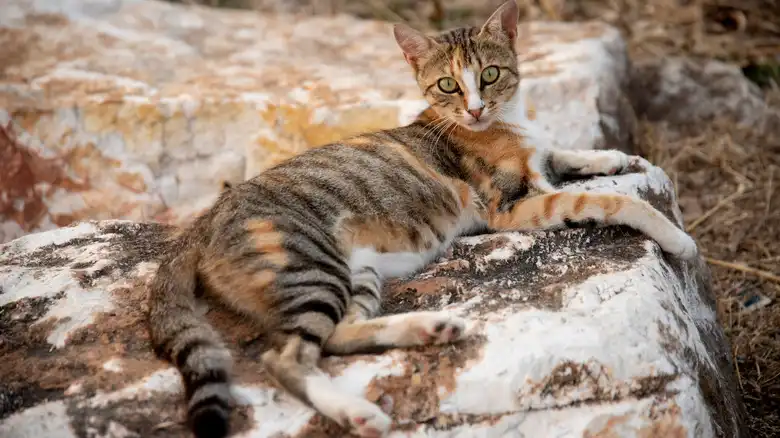
The Rarest Domestic Cat Breed In The World Is A Smart And Family-Friendly Feline With A Tabby Coat
CatsCat BreedsThe Rarest Domestic Cat Breed In The World Is A Smart And Family-Friendly Feline With A Tabby CoatByCori ChapmanFeb. 21, 2025 11:25 am ESTomerfarukguler/ShutterstockIf you've ever visited an animal shelter, you likely have seen many cat breeds with tabby coats, but you've probably not seen them all — including one very elusive feline friend. The rarest domestic cat breed in the world, referred to as the Sokoke, shares these physical coat characteristics, but with more of a wild twist due to its origins.Sokokes originated in the 1970s from other Kenyan breeds found in the Arabuko Sokoke National Forest in Africa (hence the name). The breed further developed outside of Africa thanks to intrigued cat enthusiasts in Europe and the United States. As these cats are so closely linked to their African heritage and the habitat they originate from is undergoing change, conservationists are working to preserve both. There is currently an effort to limit breeding to the specific lines they originated from — which makes the breed even rarer. Allowing Sokokes to cross-breed would also remove a lot of the heavily desired characteristics of such a unique cat.As with any rare cat, breeders are few and far between, making these some of the most expensive pets you can buy. Certain Sokoke breeders also limit how often kittens are available, driving the cost up to $1,300 to $2,500. If you can find one, however, you'll be rewarded with an adorable, family-friendly feline.What makes the Sokoke a great family petCOULANGES/ShutterstockSokoke cats are often described as energetic, highly intelligent, curious, and affectionate, making them great companions. They're also very sociable with strangers and their families alike, so they benefit from being in a home with active children, dogs, and other animals. Sokoke cats are also more "dog-like" in that they are less skittish than the average feline. However, it's important to note that this social nature and high intelligence make the Sokoke especially curious. Luckily, owners often report that their Sokokes are just as trainable and will do their best to people-please. In fact, some have trained their Sokokes to play fetch and follow certain commands. With everything in mind, a Sokoke may seem like the perfect pet for your household. However, figuring out how to adopt a cat as rare as this can be a rather rough experience because the breed may be nearly impossible to find. If you do manage to get your hands on one of the rarest domestic cat breeds out there, count yourself very lucky.
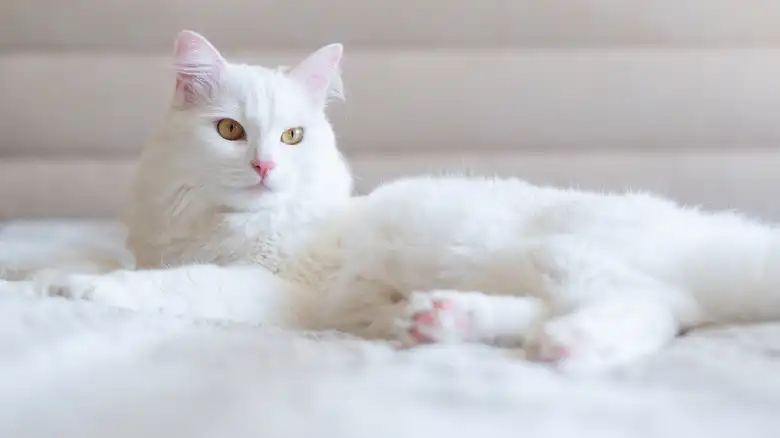
A Breed Nicknamed The 'Swimming Cat' Is An Energetic Feline That Loves The Water
CatsCat BreedsA Breed Nicknamed The 'Swimming Cat' Is An Energetic Feline That Loves The WaterByCori ChapmanUpdated: Feb. 19, 2025 12:20 pm ESTFox_Ana/ShutterstockAt a pool party, you probably wouldn't expect to see felines in the water — that is, unless they happen to be a Turkish Van. Unlike many cats, which have an intense hatred for water, this rare and highly energetic breed doesn't mind getting wet; in fact, as their name implies (inspired by a lake in their country of origin), they loves to swim. The Turkish Van likes water so much that owners may struggle to shower alone if they leave the bathroom door even slightly ajar.What about this breed allows them tolerate water in ways their fellow felines can't? It's all in their fur. Normally, when a cat gets wet, their coat grows heavy and weighs them down. This isn't the case with Turkish Vans, which have silky fur that causes water to slip right off of them. They also don't have an undercoat; without this thick layer to soak up water, these cats dry off at lightning speeds even after prolonged exposure.Unfortunately, the purebred Turkish Van is so rare that you may not see one without traveling to their home country. It's estimated that fewer than 200 are born in the United States annually. If you are lucky enough to keep a Turkish Van as a pet, you'll find this active cat makes for a loving and playful companion.The Turkish Van cat doesn't mind having funEmily "Moon" Combs/Static MediaAlthough it's great to know that a Turkish Van doesn't mind taking baths, be forewarned that their love of water may cause some trouble. While bathing yourself, it is probably best to leave the door closed unless you want your Turkish Van to join you. However, no water source is safe from their playful paws. Faucets and toilets will also appeal to the Turkish Van's nature. These cats are so clever that they more often than not learn to turn on the faucet themselves.Additionally, having a mop handy is essential because this cat loves to splash and play in their water dish. Because of this, they would greatly benefit from a drinking vessel like a fountain with constantly flowing water to attract their attention. While this could be annoying, these splash-fests make the breed the perfect playmate for an older child who will reciprocate that energy.Though Turkish vans are known for being highly energetic and playful, they still appreciate their space and aren't known for being very snuggly. For this reason, they may not be the best option for families with infants or small children, though this could vary from cat to cat. Older children may be fine to handle the feline, but parents should make sure to teach their children to respect their space to ensure they feel comfortable.
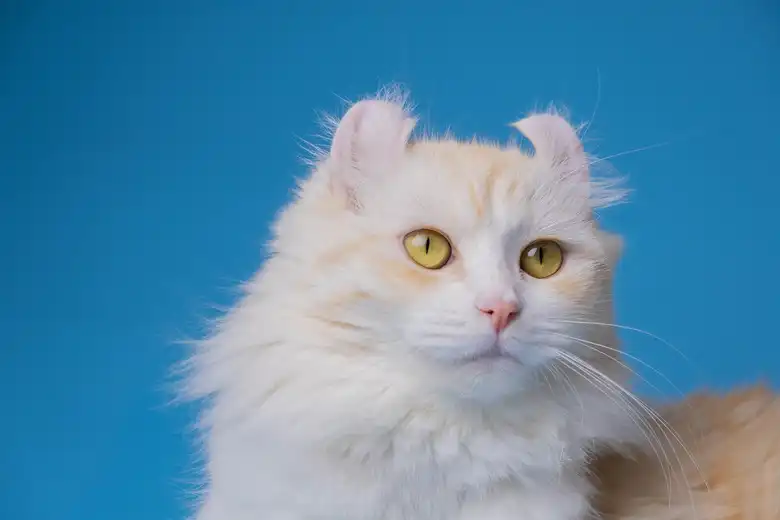
American Curl Cat Breed Characteristics
CatsCat BreedsAmerican Curl Cat Breed CharacteristicsByKatherine MaloneJan 26, 2023 12:03 pm ESTNoi_Pattanan/iStock/GettyImages #pb3d9f8edf8e43007836ed3479bd017fb, #pb3d9f8edf8e43007836ed3479bd017fb img { aspect-ratio: 6240/4160; height: auto; } In This ArticleAmerican curl cat quick factsAmerican curl cat historyAmerican curl cat personalityAmerican curl cat lifespan & health issuesAmerican curl cat grooming & careWelcoming a new catAmerican curl cat quick factsAmerican curl cat quick factsLength: 12 – 16 inchesWeight: Females: 5 – 8 pounds, Males: 7 – 10 poundsLifespan: 11 – 15 years or moreCoat length: Shorthair and longhairColoring: All coat colors and patterns including tabby, tortoiseshell, bicolor, and calicoMore Like ThisCatsAmerican Wirehair Cat Breed CharacteristicsCatsBritish Shorthair Cat Breed CharacteristicsCatsBirman Cat Breed CharacteristicsGrooming needs: Low to mediumFriendliness: Breed alone is not an accurate predictor of individual cats' personalities. However, American curl cats are generally regarded as intelligent, social, and playful.The American curl cat is a small to medium-sized cat with a big personality. They have been nicknamed "Peter Pan" because they continue to be playful and kitten-like into adulthood. These domestic cats come in both long and short hair. They also come in all colors and patterns including tabby, tortoiseshell, bicolor, and calico.If you are looking for a beautiful cat with a unique appearance and a sociable and playful personality, the American curl may be the breed of cat for you. Carefully consider the breed's care requirements and personality before selecting a kitten to bring home to your family.White_bcgrd/iStock/GettyImages #e02a86fd09d3ab7074332c0e54f5d4924, #e02a86fd09d3ab7074332c0e54f5d4924 img { display: block; aspect-ratio: 1.4980079681275American curl cat historyAmerican curl cat historyThe American curl is a fairly new breed. It was first bred by a black kitten who was found by Joe and Grace Ruga in Lakewood, California, in 1981. The kitten had long hair and curled ears and was named Shulamith. When she grew up, she had a litter of four kittens. Half of the litter had curled ears. Breeders started selective breeding in 1983 to develop what would become the American curl cat breed. This breed of cat is recognized by the Cat Fanciers' Association (CFA)and the International Cat Association (TICA).Geneticists studied the cats to determine how the curly ears were passed on. Feline geneticist Roy Robinson determined that the trait is autosomal dominant, which means that a kitten must have at least one copy of the dominant gene.The American curl's ears have firm cartilage at the base of the ear that extends up at least 1/3 of the ear. The top of the ear is thin and flexible and curls back. The breed standard requires that the curled-back ears form an arc that is at least 90 but no more than 180 degrees. The backward curl is one factor that distinguishes the cats from the Scottish fold, whose ears fold forward.American curl kittens have straight ears when they are born. Within a few days, the ears develop a tight curl. From the age of 6 weeks to 4 months, the ears slowly uncurl.American curl cat personalityAmerican curl cat personalityThe American curl cat is known for their kitten-like behavior. They love your company and will likely be waiting for you to wake up. and accompanying you around the home as you go about your day. They are curious and intelligent. They enjoy exploring and will likely examine any purchases you bring into your home. Be aware that this breed has a somewhat uncanny ability to open doors.They love to play games of fetch but they can also entertain themselves with available toys. The cats also jump and climb and you may often find them on high perches.They love to play but they are also very affectionate. They tend to vocalize with a cooing sound, but they aren't overly loud cats. They may greet you with a head bump and wake you up by licking your hair. American curls tend to get along well with other pets.eugenesergeev/iStock/GettyImages #e941d63536e5979e022d0cb6bfc4e8286, #e941d63536e5979e022d0cb6bfc4e8286 img { display: block; aspect-ratio: 1.4659557013946American curl cat lifespan and health issuesAmerican curl cat lifespan and health issuesA healthy American curl cat can live into their mid-teens or longer. Fortunately, this tends to be a very healthy breed and there aren't any known genetic health problems that affect the cats.However, due to their unique ear shape, cats are prone to developing ear infections. Watch for symptoms of an infection that may include:head shakingear scratchingred and inflamed earsyellow or black ear dischargefoul odor from the earsIf you see symptoms of an ear infection, take your cat to a veterinarian. They can diagnose the cause of the infection and prescribe an effective medication to treat your cat.American curl cat grooming and careAmerican curl cat grooming and careThe American curl cat comes in both long and shorthair varieties. The cats have little in the way of an undercoat and do not shed very much. Shorthaired cats should be brushed occasionally to remove loose hair. Longhaired cats need more frequent brushing to prevent tangles and matting. Grooming a couple of times per week is usually sufficient.Be sure to check and clean the cat's ears when you brush them. This keeps the ears clean and helps to prevent infection. Use a soft cotton and an ear-cleaning solution designed for cats and recommended by a veterinarian.Other care requirements include:checking the cat's nails and trimming them as neededfeeding a high-quality commercial cat food as recommended by your veterinarianproviding fresh drinking water that is available for your cat at all timestaking your cat in for regular veterinary examinationsstaying up-to-date with recommended vaccinationsNitiphonphat/iStock/GettyImages #e4ebacbc826e8fdaaff9cf6fa974a37f3, #e4ebacbc826e8fdaaff9cf6fa974a37f3 img { display: block; aspect-ratio: 1.7777777777778Welcoming a new cat into your homeWelcoming a new cat into your homeBringing a new American curl kitten or cat into your home is an exciting time. The playful energy of the cat is sure to bring joy into the home. Before you welcome your cat, make sure to cat-proof your home. Put away anything that may be harmful to your new cat. Remember the American curl has a tendency to open doors and cabinets. Consider using child-proof latches on cabinets that contain harmful materials such as cleaning supplies.Set up a safe room where you can welcome your new kitten. Make sure they have everything they need including:food and waterlitter boxcat treescratching postcat toysAllow your cat to explore the room at their own pace. You don't want to push them to be held or explore areas they don't want to be in. Instead, sit and offer to play with them. Giving them plenty of positive reinforcement is a good way to start developing a loving and trusting relationship.Introduce your new cat to any other pets and children you have in the household. Once your new cat is comfortable, you can open up the door so they access more of the home. It shouldn't take long for these curious and adaptable cats to become comfortable — but don't rush them. Before you know it, your American curl will be an integral part of family life.ReferencesThe International Cat Association: The American Curl BreedCat Fanciers' Association: About the American Curl
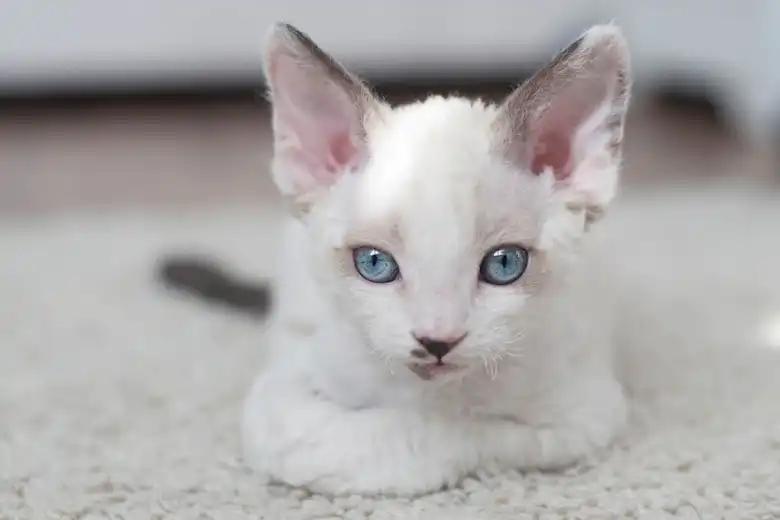
Cat Breeds That Stay Small
CatsCat BreedsCat Breeds That Stay SmallBySierra M. KoesterUpdated Apr 14, 2022#pfff1ec3cef240daf0ffc401f6b1e67a6, #pfff1ec3cef240daf0ffc401f6b1e67a6 img { aspect-ratio: 750/500; height: auto; }An average adult cat is 9 to 10 inches in height and weighs about 10 pounds. The world's smallest cat breed is the Singapura; however, there are several other small cat breeds, including the LaPerm, Japanese bobtail, Munchkin, and Minuet. While each of these breeds may be smaller than an average-size cat, they have big personalities and unique features that set them apart from other cat breeds.Singapura: the world's smallest cat breedSingapura: the world's smallest cat breedThe Singapura is the world's smallest cat breed, typically weighing between 4 and 8 pounds. They have big eyes and ears, a normal-size tail, and small feet. Singapuras don't reach their full size until they are almost 2 years old. The Singapura originated in Singapore and was brought to the United States in the 1970s.More Like ThisCatsJapanese Bobtail Cat: Everything You Need to Know About This Playful Cat BreedCatsBalinese Cat Breed CharacteristicsCatsChartreux Cat Breed CharacteristicsSingapuras are intelligent and inquisitive, and they love to be around people. This breed is active and outgoing. They tend to get along well with other cats. Singapuras love to climb and may even sit on your shoulder as you walk around the house. This breed does best in a home where they get a lot of human interaction.Munchkins have short legsMunchkins have short legsMunchkins look like any other cat except for their short legs. The breed's short legs are a result of a natural genetic mutation. Short-legged cats are not new, but it wasn't until the 1990s that the breed began to be developed. Munchkins are among the small cat breeds, weighing between 5 and 9 pounds when they are fully grown. Munchkins are both short-haired and long-haired. They come in a variety of coat colors and patterns.Munchkins are curious and like to explore their environment. They are social and tend to do well with other cats, dogs, and children. Their short legs do not slow them down; Munchkins love to run and play.LaPerm: a curly coated catoxico/iStock/GettyImages #pe9296f2fb7ffa4432acfafbb94d1788f, #pe9296f2fb7ffa4432acfafbb94d1788f img { aspect-ratio: 8256/5504; height: auto; }LaPerm: a curly coated catThe result of a natural genetic mutation, LaPerms have a distinctive wavy or curly coat. A LaPerm's coat can range in curliness from wavy to ringlet-type curls. Ringlet-type curls can range from tight ringlets to long, corkscrew curls. While some LaPerms are born bald, most kittens have short, straight, or wavy hair at birth. LaPerms are both short-haired and long-haired, and their coat comes in many colors and patterns.LaPerms are gentle, affectionate cats and tend to get along well with other household pets and children. These cats are people-oriented and seek out human contact. It is not uncommon for them to reach a paw out and touch their owner's face. LaPerms are inquisitive and always want to know what is going on. They love being near their people and will follow you around the house or curl up next to you on the couch.Small cat breeds: MinuetSmall cat breeds: MinuetLike Munchkins, Minuets have short legs. Minuets typically have a rounded head; big, rounded eyes; and small, rounded ears. The breed began to be developed in the 1990s by crossing a Persian and a Munchkin cat. Minuets can be both long-haired and short-haired. They are gentle, affectionate, and people-oriented. They are also inquisitive and active.Japanese bobtail: cats that stay smallJapanesebobtail: cats that stay smallJapanese bobtails are a naturally occurring breed that originated in Japan. While the Japanese bobtail has existed in Japan for at least the past 1,000 years, the first Japanese bobtail didn't arrive in the United States until 1968. The cat's most distinguishing feature is a short tail that has at least one angle, kink, or curve. No two tails are the same within this breed. Japanese bobtails can be either short-haired or long-haired, and their coat comes in a variety of colors and patterns.kanzilyou/iStock/GettyImages #e965962e8f5c0ad2e2c6f7c6c8b702284, #e965962e8f5c0ad2e2c6f7c6c8b702284 img { display: block; aspect-ratio: 1.5Japanese bobtails are active cats with a lot of energy. They are inquisitive and like interacting with their people. They will often talk back to you if you talk to them. Japanese bobtails are playful, and many enjoy games of fetch with their people. These cats usually travel well. They tend to get along well with other household pets and children.ReferencesBowPurr: How Tall is the Average Cat? How Big Will Your Cat Grow?The Rescue Vets: How Much Should a Cat Weigh?Cattime: SingapuraThe International Cat Association: Munchkin BreedCat Fanciers' Association: About the LaPermThe International Cat Association: Minuet BreedThe Cat Fanciers' Association: About the Japanese Bobtail

Russian Blue Cat Breed Facts & Information
CatsCat BreedsRussian Blue Cat Breed Facts & InformationBySarah Jeanne TerryUpdated Apr 15, 2022We know when you're looking to adopt a cat, there are so many great breeds to choose from.Ludibarrs/iStock/GettyImages #e2866ad8ef5bb43c83ff06753f039aa1f, #e2866ad8ef5bb43c83ff06753f039aa1f img { display: block; aspect-ratio: 1.504If you're looking for a feline friend that is less likely to tickle your allergies, but still an affectionate and sweet companion, then the Russian blue cat might be perfect for you.These cats are beautiful to look at, lower in the protein that tickles our allergies, and they're shy but sweet in disposition. So if you think you need a cat like that, here are all the facts about the Russian blue that you need to know.Russian blue cat basicsRussian blue cat basicsThe Russian blue is an affectionate but very shy cat. These adorable, silvery, and gray short hairs love being around their people, but they won't be distraught if you need to leave them while at work. They're smart, observant, and curious, so you can expect a playful and occasionally mischievous cat. However, these kitties love routines and will appreciate stability in their life.More Like ThisCatsKorat Cat Breed Facts & InformationCatsSilver Bengal Cat Breed CharacteristicsCatsBengal Cat Breed CharacteristicsRussian blues are overall a healthy, breed but one disease that they have a tendency for is bladder stones. Also, these cats have a voracious appetite, typically, so they can become overweight. So you'll need to manage their food and exercise carefully to keep these cats svelte and healthy.Russian blue cat historyOlezzo/iStock/GettyImages #p3b5ebad5854c44670b4da586d86ffcff, #p3b5ebad5854c44670b4da586d86ffcff img { aspect-ratio: 5616/3744; height: auto; }Russian blue cat historyThese icy blue kitties have something of a storied history. Most evidence suggests that these cats originate just south of the Arctic Circle in the Russian port city of Archangel. These cats were historically popular pets with the Russian Tsars. One of the clearest early records of the Russian blue is in 1875 when a silver-blue cat called the "Archangel Cat" appeared on display at the Crystal Palace in Great Britain. Queen Victoria was charmed by the kitty and even adopted one into her collection.The breed was lumped in with other blue cat breeds for years, but Russian blue became an official breed in 1912.Russian blue cat personalityRussian blue cat personalityRussian blue cats are very affectionate, but they're also shy and relatively independent. They don't mind being left alone while their humans go to work. They tend to shy away when new people come into the home, and they won't be the type of cats to follow their humans from room to room.If you're looking for a good family cat, know that Russian blues tend to be good with older children that know how to be respectful. They also get along well with cat-friendly dogs.Russian blues are somewhat playful and can enjoy a little fetch or feather toy. But because they are so smart, their favorite game is making their humans do what they want. They also love to jump, climb, and they love to try squeezing into tiny spaces. They also love puzzles and challenges, so giving them toys that challenge their brains will keep them occupied for hours.Russian cat appearanceSenchy/Moment/GettyImages #p293696dd835fa02a6275f2544c95e20b, #p293696dd835fa02a6275f2544c95e20b img { aspect-ratio: 4288/2848; height: auto; }Russian cat appearanceRussian blues are a popular breed thanks to their good looks. They have lovely silver-blue short hair and glowing green eyes. Their thick blue coat is relatively easy to maintain with a few simple brushings once or twice a week. It will require more brushing when it sheds seasonally.Many people think the Russian blue is hypoallergenic, and it does produce less of the protein that causes allergies, along with mostly only shedding seasonally. However, it still produces some of the allergic protein, so it can still cause allergies.Russian blue cat essential factsRussian blue cat essential factsPersonality:Affectionate, reserved, smartShedding:Seasonal, somewhat hypoallergenicGrooming:WeeklyGood with Children:YesGood with Other Pets: YesSize: MediumWeight: 5-11 poundsLife Expectancy: 10-15 yearsReferencesCatTime.com: Russian BlueMental Floss: 8 Elegant Facts About Russian Blue Cats
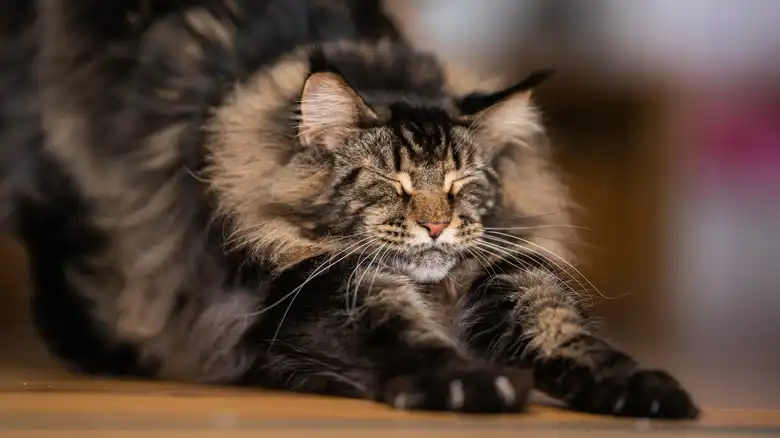
The World Record Holder For The Longest Domestic Cat Ever Was The Size Of A Small Human
CatsCat BreedsThe World Record Holder For The Longest Domestic Cat Ever Was The Size Of A Small HumanByJessica DesrosiersMarch 11, 2025 11:25 am ESTAlexandra Jursova/Getty ImagesGuinness World Records has many spots for cats, including largest and tallest. Maine coons have made a big impression in several categories, appearing as some of the biggest pet cats on record. One in particular stands out in terms of sheer size: Stewie (full name Mymains Stewart Gilligan) holds the world record for the longest domestic cat ever. He measured a whopping 48.5 inches, making him the same size as a 6-year-old child. Stewie died in 2013, but his status as the longest feline remains unchallenged.Barivel, the record holder for longest living domestic cat as of 2025, measures 47.2 inches. He took the record in 2018, and has held it for almost a decade. He also has his own Instagram account, where he shows off his gorgeous fluff and extra-long legs.Why do Maine coon cats get so big?Pixel-Shot/ShutterstockOne of the Maine coon's key identifiers is the fact that it reaches nearly double the size of your average housecat. Multiple factors likely contribute to their exceptional growth. "They adapted their physiology to deal with the harsh New England winters," Liz Hansen, Chair of the Maine Coon Breed Committee at The International Cat Association (TICA), shared with Guinness World Records. "Similar to large dog breeds, such as the Great Dane, the Maine Coon is bred for size, among other characteristics. All written standards for the breed indicate the body size should be medium to large."Bergmann's rule may have played a part in helping along the Maine coon's evolution. According to this concept, warm-blooded animals, like cats, will increase in size in colder, higher latitudes like those found in the Northern states to help them stay warm. This could explain why felines similar to the Maine coon, such as the Norwegian forest cat, are also larger and fluffier.
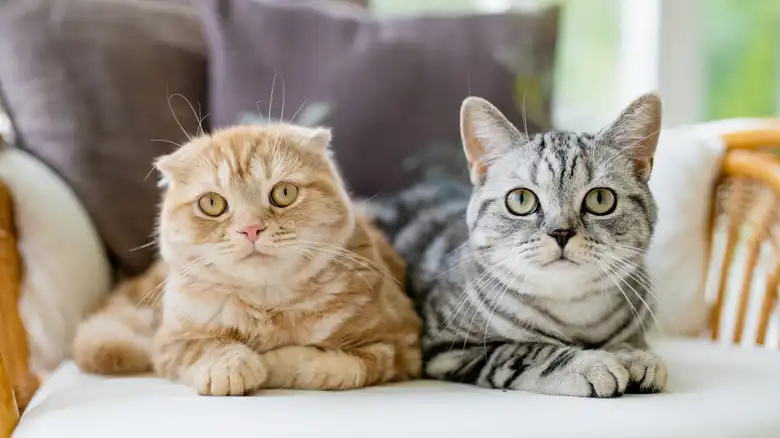
A Cat Breed With A Gene Mutation Is Known For Its Cute Folded Ears (And Health Problems)
CatsCat BreedsA Cat Breed With A Gene Mutation Is Known For Its Cute Folded Ears (And Health Problems)BySanaphay RattanavongMarch 15, 2025 11:25 am ESTMNStudio/ShutterstockScottish fold cats, also called "Lops," are famous for their distinctive folded ears, a trait that has made them one of the most popular cat breeds worldwide. However, behind this signature look lies a genetic mutation that affects more than just their ears. All Scottish folds with this trait carry a mutation in the TRPV4 gene, which weakens cartilage throughout the body. While this mutation creates their charming ear fold, it also causes Scottish fold osteochondrodysplasia (SFOCD) — a painful skeletal disorder leading to joint deformities, mobility issues, and early-onset arthritis. While all folded-ear Scottish folds develop some level of joint disease, the severity depends on whether the cat inherits one or two copies of the mutated gene. This condition doesn't just affect ear shape; it impacts the legs, paws, and tail, causing progressive joint damage. Researchers studying SFOCD identified the TRPV4 gene mutation as the root cause. Their findings confirm that this dominant genetic variant is responsible for the breed's skeletal abnormalities.While some breeders try to reduce severe cases by only mating Scottish folds with straight-eared cats, the health risks remain unavoidable. This has led to growing controversy, with animal welfare organizations questioning whether it is ethical to continue breeding Scottish folds. Austria, Belgium, and Norway, among others, have banned their breeding, citing welfare concerns. Recently, there have been calls for a similar ban in the UK. If you're considering adopting a Scottish fold, it's crucial to understand their lifelong medical needs and the challenges they may face.Understanding the hidden health challenges behind the cutenessARVD73/ShutterstockWhile it's widely known that a genetic trait causes the folded ears in the Scottish fold, this trait is also what leads to joint problems such as osteoarthritis. Fewer people realize that the mutation also raises the risk of other conditions. The soft, fragile ear cartilage can collapse the ear canal, trapping wax and debris and increasing the likelihood of chronic infections, inflammation, and, in severe cases, hearing loss. Beyond their ears, Scottish folds may develop jaw and skull malformations, resulting in crowded or misaligned teeth that can cause discomfort and raise the chances of periodontal disease.Weak cartilage can extend to the airways, sometimes leading to noisy breathing, mild respiratory distress, or trouble tolerating exercise — particularly in hot weather. Compounding these issues, Scottish folds often adopt a lower activity level, increasing the risk of weight gain. Obesity places extra stress on already delicate joints and may contribute to diabetes or heart disease. As felnes are highly adept at hiding their symptoms and thus make it hard for us to tell if cats are in any pain, we owe it to them to give these deeper considerations. For Scottish folds, in particular, the depth and breadth of TRPV4's impact can't be ignored.What should potential Scottish fold owners consider?oatawa/ShutterstockBefore bringing a Scottish fold into your life like Taylor Swift has (and her cats lead seriously amazing lives), it's important to reflect on the long-term responsibilities tied to their unique genetic challenges. First, consider whether you can financially commit to potential treatments, including arthritis management, repeated veterinary visits, and any number of hidden costs of caring for this specific pet. Next, assess whether you're prepared to adapt your home environment by adding ramps or padded surfaces to reduce strain on fragile joints. Finally, think about your reasons for choosing this breed. If your priority is a healthy companion with few medical risks, exploring other cat breeds — or even adopting a mixed-breed or senior shelter cat — may be the kinder and more practical option.While the folded ears of a Scottish fold can be irresistibly endearing, it's crucial to remember that this feature often comes at a high cost to the cat's well-being. Breeding purely for aesthetics can perpetuate genetic issues that lead to chronic pain and a diminished quality of life. Until future genetic research offers more reliable ways to mitigate these health problems, ethical breeding and fully informed ownership are paramount.Always consult your veterinarian before making changes to your pet's diet, exercise, or care. To find an accredited veterinarian in your area, you can search theAmerican Animal Hospital Association's online database.
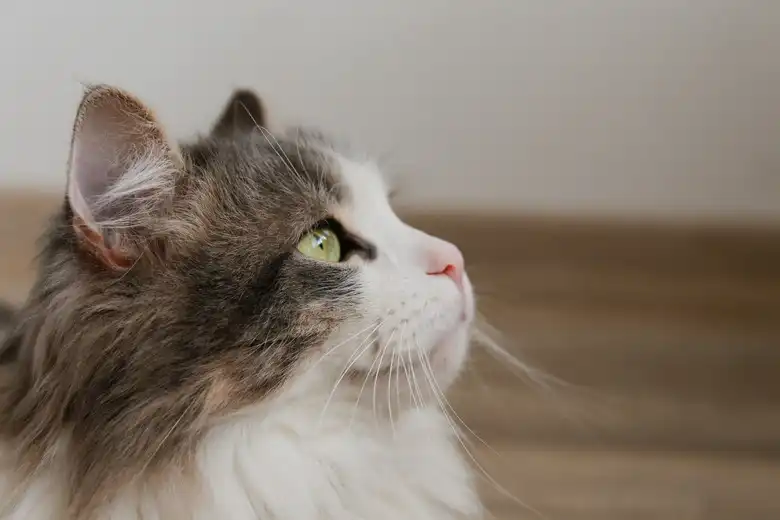
Ragamuffin Cat Breed Characteristics
CatsCat BreedsRagamuffin Cat Breed CharacteristicsByKatherine MaloneDec 13, 2022 12:03 pm ESTEvrymmnt/iStock/GettyImages #p21de1136ecf2f0f0003b33e1301b294a, #p21de1136ecf2f0f0003b33e1301b294a img { aspect-ratio: 5472/3648; height: auto; } In This ArticleRagamuffin quick factsRagamuffin cat historyRagamuffin cat personalityRagamuffin cat lifespan & health issuesRagamuffin cat grooming & careWelcoming a new catRagamuffin quick factsRagamuffin quick factsLength: 12 – 18 inchesWeight: Females: 10 to 15 pounds, Males: 15 to 20 pounds or moreLifespan: 13 – 16 yearsCoat length: Medium to longColoring: All colors and coat patterns except for pointed colorsMore Like ThisCatsRagdoll Cat Breed CharacteristicsCatsSomali Cat Breed CharacteristicsCatsBritish Shorthair Cat Breed CharacteristicsGrooming needs: HighFriendliness: Breed alone is not an accurate predictor of individual cats' personalities. However, ragamuffin cats are generally regarded as affectionate, friendly, and relaxed.Ragamuffin cats have beautiful long hair and walnut-shaped eyes that can capture your heart. The cat breed has a loving personality to match and while they enjoy playing, they also love to cuddle like a teddy bear. Before bringing a ragamuffin kitten into your home, consider their personality and care requirements to make sure the breed is a good fit for your home and lifestyle.Zoonar RF/Zoonar/GettyImages #e16537bf4f38661d74d5678cb18ff0f1b, #e16537bf4f38661d74d5678cb18ff0f1b img { display: block; aspect-ratio: 1.4991341991342Ragamuffin cat historyRagamuffin cat historyThe history of the ragamuffin breed begins with the ragdoll cats. Ragdolls were developed in the 1960s by Ann Baker in California. The breed originated from a domestic longhair cat named Josephine who had some kittens with the unique ragdoll temperament and habit of going limp when they are picked up. By continuing to breed these unique and desired characteristics, she developed the ragdoll breed. Many breeders started to breed ragdoll cats and register them with the registry created by Ann Baker.Eventually, a group of breeders decided to break away from Baker's purebred ragdoll breed registry. They took their ragdoll cats and applied for recognition for the breed from the American Cat Fanciers Association. At that time, the group selected the name ragamuffin for the new breed. The breed is also recognized by the American Association of Cat Enthusiasts and the Cat Fanciers Federation. The Cat Fanciers' Association (CFA) granted the breed championship status in 2011.The ragamuffin cat breed still shares many characteristics with the ragdoll, including their large size and long coat. There have developed differences as well. While ragdoll cats all have a colorpoint coat pattern and blue eyes, the ragamuffin breed standard allows other coat patterns except pointed colors and most eye colors. Some of the accepted colors and patterns for ragamuffin cats include:solid colors including white, black, blue, lilac, and chocolateshaded colors include chinchilla, shaded golden, and tortoiseshell shadedtabby colors and patterns include classic tabby, mackerel tabby, and patched tabby in a variety of colors including brown, blue, fawn, and lilacparti-colored including tortoiseshell, blue cream, lilac cream, and fawn creammink pattern in colors including natural, blue, champagne, platinum, and fawn with aqua eyessepia colors and patterns including sable, champaign, blue sepia, and red sepia with yellow-gold to green eyescalico and bicolor pattern in all coat colorsRagamuffin cat personalityRagamuffin cat personalityRagamuffin cats may be the ideal lap cat. They are sweet and affectionate and love nothing more than time cuddling with family members. And as the name implies, they will go limp like a rag when you hold them in your arms.The cats are calm and patient and enjoy being a part of family activities. While they love to cuddle, they also enjoy playtime. These personality traits make the breed a great choice for families with children and other pets as the ragamuffin will fit right in. The cats can also be trained to walk on a leash, play fetch, and do tricks.Evrymmnt/iStock/GettyImages #edc0677341a2b701620fd72bf899ba08b, #edc0677341a2b701620fd72bf899ba08b img { display: block; aspect-ratio: 1.5Ragamuffin cat lifespan and health issuesRagamuffin cat lifespan and health issuesA healthy ragamuffin cat typically has a life expectancy of 13 to 16 years. They are generally quite healthy, but there are some health problems to watch out for with this breed. Two common concerns are:polycystic kidney disease (PKD): A genetic health condition that causes cysts in the kidney and can eventually cause kidney failure.hypertrophic cardiomyopathy: A type of heart disease that causes a thickening of the heart muscle.The ragamuffin is a large cat and obesity is a concern as it can cause or worsen other health problems. If your cat is overweight, work with a veterinarian to make adjustments to your cat's diet and exercise programs.Ragamuffin cat grooming and careRagamuffin cat grooming and careRagamuffin cats have medium-long to long long fur and a thick undercoat. Brush the cat each day to keep the coat from matting. Make sure to comb the undercoat as well, not just the smooth surface hairs. Work out knots gently before they have the chance to become more serious mats. Matting can be extremely painful for a cat and the fur may need to be shaved completely to remove the mats.Brush the cat's teeth regularly using toothpaste that is veterinarian-approved for cats. Check their nails each week and trim them as needed.Feed high-quality cat food in the amount recommended by your veterinarian. Avoid free feeding as many ragamuffin cats have a tendency to become overweight.Evrymmnt/iStock/GettyImages #e5d6444473ef264d07c0c29bfa30c12dd, #e5d6444473ef264d07c0c29bfa30c12dd img { display: block; aspect-ratio: 1.5Welcoming a new cat into your homeWelcoming a new cat into your homeBefore you welcome a new ragamuffin kitten into your home, make sure you cat-proof the home to make sure you have a safe environment for the cat. Set up a room where you can allow the cat to get comfortable with their new environment. Make sure you have all the supplies you need including:food and water disheslitter boxcat treescratching posttoysAllow the new cat to explore the room at their own pace. While the ragamuffin cat loves to cuddle, avoid the temptation to grab the cat and hold them to be petted. Allow the cat to come to you when they are ready.Once the new cat starts feeling comfortable, introduce any other pets or children in the home. Talk to your kids to make sure they handle the new cat gently and monitor the interactions between the new ragamuffin cat and other pets to make sure everyone stays safe. Always use positive reinforcement with your cat.When you are confident that the ragamuffin cat and other pets will get along and the ragamuffin is comfortable, you can open up the door and allow them to explore more of the home. Before you know it, your ragamuffin will make themselves an integral part of the family.ReferencesAll About Cats: Ragamuffin CatThe Cat Fanciers' Association: About the RagaMuffin
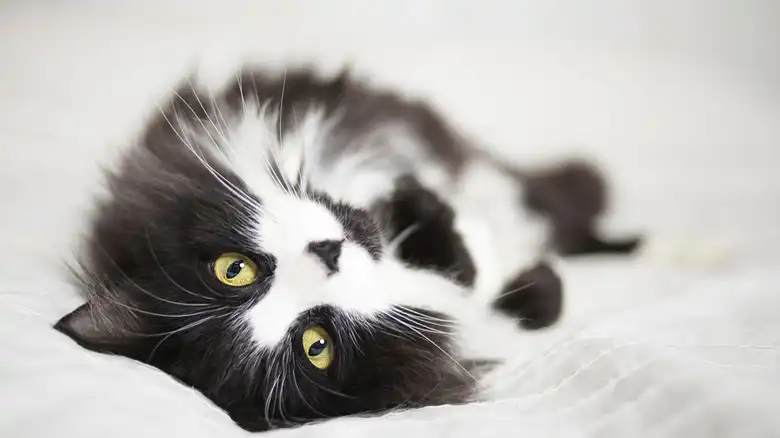
Cat Breeds That Can Be Black And White
CatsCat BreedsCat Breeds That Can Be Black And WhiteBySherri TelenkoUpdated: Dec. 11, 2024 4:09 pm ESTSnowyPhotoStock/iStock/Getty ImagesThere's something about black and white cats that's sentimental. Many people have childhood memories of growing up with the classic tuxedo kitty: a cat whose white chest and black back provide a very formal look. Note that black and white, or piebald, is a reference to a color combination, not a specific breed.Not all black and white cats are purebreds. Some are a mix of different lineages, and bicolored cats, also called magpies, can result from the crossing of almost any feline breed. Interestingly, black and white is the most common bicolored combination among felines, which might explain why so many people have fond memories of snazzy tuxedo cats.The white cat with black markings color combination can appear in several breeds. Interestingly, black and white cats are actually black cats with a white spotting gene. This gene is dominant and switches off color randomly throughout the fur, creating white patches.Long-haired black and white cat breedsTasha_lyubina/Getty ImagesThe Persian cat is not only one of the oldest and most popular cat breeds but it's also one that's most likely to be black and white. The thick, lustrous fur of the Persian (originally from Iran) looks particularly regal in black and white. Purebreds have a flat face, while black and white crosses will likely have regular cat facial features but maintain the characteristic flowing fur. Persians of any color require daily grooming.Likewise, the thick-coated fur of the large Maine coon, sometimes referred to as the gentle giant of the cat world, is also stunning in contrasting black and white. Maine coons, however, can be any of an assortment of colors. They are an independent, outgoing breed that's usually good with all family members, including children and dogs.Short-haired black and white cat breedsWirestock Creators/ShutterstockTwo short-haired cat breeds that commonly appear as bicolored black and white cats are the British shorthair and the classic American shorthair. These are two different breeds, not simply two different geographies, as many first assume. A visual distinction is that the British shorthair eyes are larger, and the head is more rounded than its American counterpart. Either can appear black and white, though they are often tabby-colored.The small-bodied, sleek Oriental shorthair cat is often confused with the Siamese unless they are black and white cats — then, they have a distinct look missing the Siamese sandy markings. The Oriental is particularly striking in black and white thanks to its characteristic green eyes. Similarly, the smallish 6- to 10-pound Cornish rex — a good choice for many allergy sufferers — can also sport short, curly black and white fur in addition to its usual coloring of browns and copper.While the Cornish rex lacks guard hair (the outer layer of fur), the Devon rex's curly coat is made of all three types of fur: guard, awn, and down. The Devon rex is a different breed than the Cornish rex, stemming from an entirely different gene, but the Devon rex can also be born black and white. This bicolor variation is acceptable in the show ring.
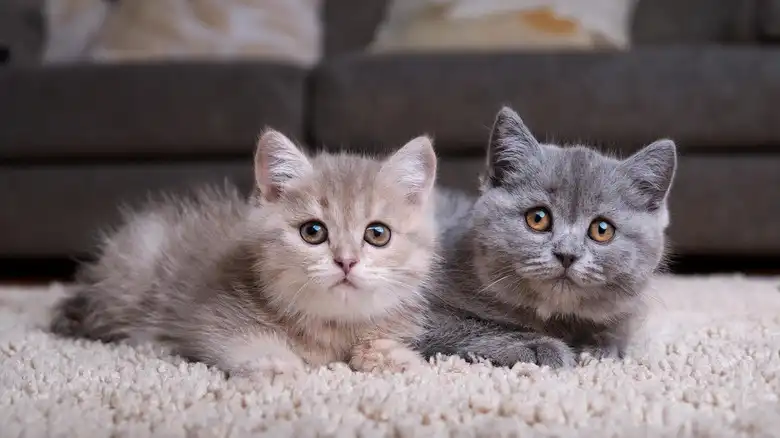
How To Tell If A Kitten Will Have Long Hair
CatsCat BreedsHow To Tell If A Kitten Will Have Long HairByCynthia AnayaUpdated: Nov. 14, 2024 5:00 pm ESTSameer Neamah Mahdi/ShutterstockIf you have plans to add a kitten to your home soon, you might have a list of characteristics you're seeking, like gender, age, and color. But did you know that hair length also plays a role in many adopters' decisions? Long-haired felines tend to be fluffier, giving you more fur to pet, though some folks prefer short hair to reduce cat shedding. But how do you know which is which when they're kittens? You can determine if a kitten will be long- or short-haired by learning its breed or by looking at its tails, toes, and ears.Whether you're searching for a kitten online or in person, the pet's description typically includes its breed, but if it doesn't, ask an employee or email the shelter. Himalayan, Main Coons, and Persians are among the most common long-haired cat breeds, so assuming the kitten remains healthy, you can expect them to grow bunches of long, soft fur. Sometimes, the kitten's overall body fluffiness also serves as a tell-tale indicator that it will have long hair in the future.What's more, the amount of hair in the kitten's tail, toe, and ear areas can indicate whether the cat will have long hair as it grows. Long-haired kittens typically have tufts of hair sticking out around their paw pads and between their toes, as well as fluffy tails, while short-haired kittens do not. A long-haired kitten also typically has noticeable long hair growing out of its ears, which can be about an inch long. On a short-haired kitten, the ear hair is shorter. All of this said, you may be able to find out whether a cat will have long hair or not before it's even born.How to determine a cat's hair length before it's bornAlkarnasia/ShutterstockAlthough many veterinarians recommend spaying and neutering, not all cat parents can make arrangements for the surgery, especially if they're caring for a feral cat to later make it a pet. This often results in cat pregnancies, which, of course, can also happen with unaltered indoor cats. Assuming you know the breed or hair length of the tom cat that impregnated the queen, you may be able to determine if any of the kittens will have long hair.The ASPCA says a cat's genes determine what its hair will look like because the gene carrying the long hair trait in cats is recessive. What does this mean? Well, the offspring that comes from a short-haired cat mating with a long-haired cat will exclusively be short-haired, as the short-hair gene is dominant. But the science doesn't end there. If a short-haired cat from that litter were to mate with a long-haired cat, some kittens could be born with long hair. Also, if two long-haired cats breed, their offspring will only consist of long-haired kittens thanks to them both carrying the recessive gene. With this in mind, you should be able to have a good idea of which kittens, burn or unborn, will grow into some long locks.
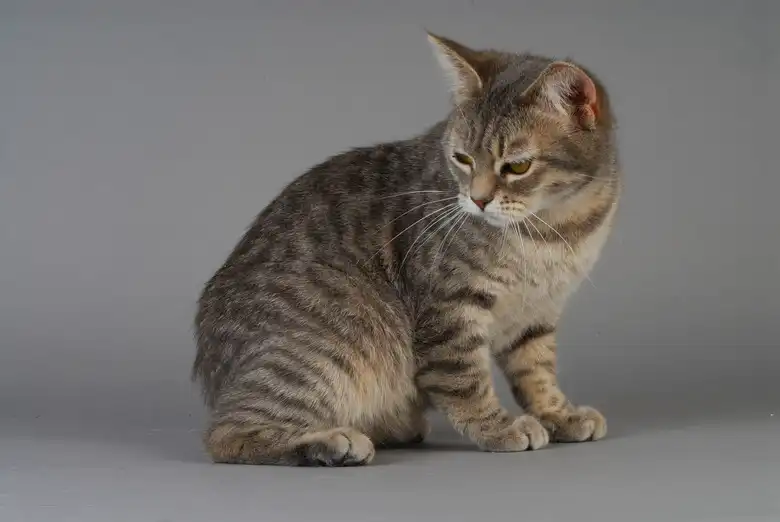
Manx Cat Breed Characteristics
CatsCat BreedsManx Cat Breed CharacteristicsByKatherine MaloneUpdated Nov 11, 2022Michel VIARD/iStock/GettyImages #p1b53918ac438315b74befacfe28fb6a5, #p1b53918ac438315b74befacfe28fb6a5 img { aspect-ratio: 3872/2592; height: auto; } In This ArticleManx cat quick factsManx cat historyManx cat personalityManx cat lifespan and health issuesManx cat grooming and careWelcoming a new catManx cat quick factsManx cat quick factsLength: 14 – 16 inchesWeight: Female 8 – 10 pounds, males 10 – 12 poundsLifespan: 12 – 16 years or moreCoat length: ShortColoring: All coat colors and coat patternsMore Like ThisCatsBurmese Cat Breed CharacteristicsCatsEgyptian Mau Cat Breed CharacteristicsCatsSnowshoe Cat Breed CharacteristicsGrooming needs: LowFriendliness: Breed alone is not an accurate predictor of individual cats' personalities. However, Manx cats are generally regarded as playful and loyal.Manx cats are easily recognizable by their lack of a tail. You will see Manx cats in every color and pattern including calico, tortoiseshell, and tabby. These adorable cats have a round shape, from their round, tailless body to their round head and round eyes.But the best thing about this breed is their personality. These medium-sized cats tend to be affectionate and loyal to their owner and they love to play, giving cat owners plenty of opportunities to laugh at their antics.slowmotiongli/iStock/GettyImages #efa3c67330cc789bdca2d00bfc08bddf8, #efa3c67330cc789bdca2d00bfc08bddf8 img { display: block; aspect-ratio: 1.5248287671233Manx cat historyManx cat historyThe Manx cat breed is believed to have originated in the Isle of Man, although they may also have come from parts of Great Britain such as England or Wales. The first image of these tailless cats dates back to 1810, although the breed is believed to be even older.Some may share tales that the Manx cat lost their cat tails when it was cut off by Noah closing the door to the ark on a cat's tail. However, the reality is that the cats have a genetic mutation that prevents the development of the vertebrae in a normal-length tail. The trait persisted as the breeding population on the island was limited and inbreeding was common.While taillessness is common for the Manx breed, it is important to note that some Manx cats do have a short, stub tail or even a full-length tail. Manx cats have different nicknames based on their tail length. For example, those who are completely tailless are called a rumpy or rumpy riser tail; those with a partial tail are called stump; ones with a short tail are called stubby; those with a long tail are called longy.There is also a type of Manx with longhair. A long-haired Manx is called Cymric. The International Cat Association (TICA) recognizes the separate breed, and it has the same standard as the Manx cat. The Cat Fanciers' Association (CFA) considers Cymric to be a part of the Manx breed.Manx cat personalityManx cat personalityManx cats love people and tend to be very affectionate. They want to be in your company, so if you frequently need to leave your cat alone for long weekends — this may not be the best breed for you. The cats also get along with children and pets. Manx cats can make a wonderful and memorable family pet.Manx cats are calm and even-tempered, but that doesn't mean they don't like to play. They can be quite active and some describe the cats as clownlike. They are athletic and can turn quickly as they race through the house. They are also very intelligent. You may find your Manx cat opening doors and investigating the highest shelves.Manx cats also have some dog-like behaviors. It is not uncommon for a Manx to play fetch. Some cats who have access to a garden will even bury their toys. While many Manx cats will share affection with all of your family members, it is not uncommon for a cat to bond more strongly with a single family member.Angie Selman / EyeEm/EyeEm/GettyImages #ec984c9a9f1661c3b281e2bd19d83bd6a, #ec984c9a9f1661c3b281e2bd19d83bd6a img { display: block; aspect-ratio: 1.3333333333333Manx cat lifespan and health issuesManx cat lifespan and health issuesManx cats that are in good health and receive excellent care can live for 16 years or more. They tend to be very healthy cats; however, there are some health problems to be aware of with this breed. The main issues are related to the complications of being a tailless cat. The tailless gene is a dominant gene, so a Manx cat only needs one copy to be a tailless Manx. Unfortunately, kittens with two copies of the gene do not survive.One major concern is Manx syndrome, which is a type of spina bifida caused by the malformed or severely shortened vertebrae in the spine. Symptoms can vary depending on the type and severity of the spinal abnormality. Symptoms can include:urinary issues such as incontinence and other problems.abnormal limb function of a cat's hind legs can become either partially paralyzed or have abnormal gaitrectal issues stemming from a megacolon and rectal prolapseUnfortunately, there is no cure for Manx syndrome. However, you can offer supportive care to cats suffering from the syndrome.Manx cat grooming and careManx cat grooming and careManx are shorthair cats with a double coat. The thick coat contributes to the rounded look of the breed and is very easy to care for. Simply brush the cat a couple of times per week to remove the loose fur. Cymric cats need more frequent brushing to keep their long coat free of tangles and mats. It is important to take care when grooming around the hind end — there may be exposed nerves where the vertebrae end.As with all cats, be sure to trim their nails regularly and brush their teeth with veterinarian-approved toothpaste. It is recommended to feed Manx cats canned cat food twice per day to help keep them hydrated. Be sure to always give them clean drinking water as well.Aletakae/iStock/GettyImages #e047e86831fb6f8edd7ff9cfb65769b20, #e047e86831fb6f8edd7ff9cfb65769b20 img { display: block; aspect-ratio: 1.5Welcoming a new cat into your homeWelcoming a new cat into your homeManx cats may have an even temperament, but it is still important to cat-proof your home. Put away anything that may harm your cat, including plants that may be dangerous to pets. While a kitten may not be able to reach a toxic plant on a high shelf, it won't be long before your Manx will develop the strength to reach high places.Keep your cat confined to a single room when you first bring them home. As they grow more comfortable, you can open doors and allow them to access more of the home. Spend time with your new cat but don't force your cat to play or be petted. Instead, talk to them, offer to play with toys, and pet them only when they approach you. Always use positive reinforcement when training. Consider teaching them tricks to stimulate their mind and keep them focused on you.Of course, you want to cuddle with your new pet. Though having patience will pay off as you develop a trusting relationship with your cat. If you have other pets in the home, introduce them slowly to make sure it is a positive experience for all.ReferencesVeterinary Partner: Manx Syndrome in CatsInternational Cat Association: Manx At A GlanceCat Fanciers' Association: The Manx Cat – Cymric (Longhair Manx)
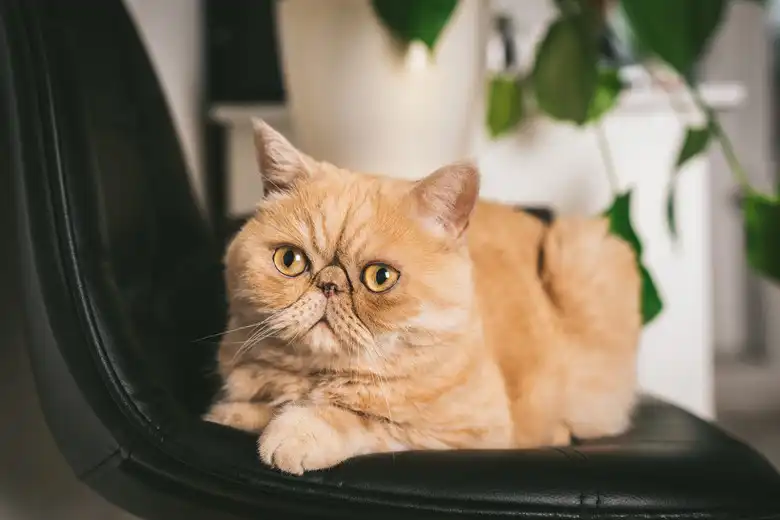
Exotic Cat Breed Characteristics
CatsCat BreedsExotic Cat Breed CharacteristicsByKatherine MaloneJan 4, 2023 12:03 pm ESTArx0nt/iStock/GettyImages #pd8cce402809279b35696b8a89c98db40, #pd8cce402809279b35696b8a89c98db40 img { aspect-ratio: 4850/3237; height: auto; } In This ArticleExotic cat quick factsExotic cat historyExotic cat personalityExotic cat lifespan & health issuesExotic cat grooming & careWelcoming a new catExotic cat quick factsExotic cat quick factsLength: 11 – 16 inchesWeight: Females: 6 to 10 pounds, Males: 7 to 14 poundsLifespan: 12 – 16 yearsCoat length: ShortColoring: All coat colors and patternsMore Like ThisCatsDevon Rex Cat Breed CharacteristicsCatsHimalayan Cat Breed CharacteristicsCatsTonkinese Cat Breed CharacteristicsGrooming needs: MediumFriendliness: Breed alone is not an accurate predictor of individual cats' personalities. However, exotic shorthair cats are generally regarded as quiet and gentle.Developed as a cross between an American shorthair and a Persian cat, the exotic shorthair cat has the stunning looks of a Persian cat but with fewer grooming requirements. The breed has a plush coat that makes cuddling with these affectionate cats a joy. Exotics tend to be very quiet, but you are sure to be drawn in by their large, expressive eyes. If you are looking for a laidback cat to join your family, the exotic cat may be a great choice. Carefully consider the breed's personality, care requirements, and health concerns before bringing a new exotic kitten into your home.© copyright 2011 Sharleen Chao/Moment/GettyImages #ee4787b414deeaeff7867c65c15d5db34, #ee4787b414deeaeff7867c65c15d5db34 img { display: block; aspect-ratio: 1.5Exotic cat historyExotic cat historyThe exotic cat breed is a new breed that was developed in the 1950s when cat breeder, Carolyn Bussey, crossed a Persian cat with an American shorthair. Her goal was to create a brown Persian, and while she didn't achieve that goal, she was pleased with the resulting kittens.American shorthair breeders also crossed an American shorthair with a Persian cat. Their goal was to get bring the silver coloring and green eyes to the American shorthair breed. While the resulting kittens did have the silver color, they had a body type and face that resembled the Persian breed rather than American shorthairs. Breeding programs used outcrosses with Burmese and Russian blue cats to obtain the desired coloring.The breed was originally called Sterling but was later changed to exotic. All coat colors and patterns are accepted, including calico and tabby. The Cat Fanciers' Association (CFA) granted exotics championship status in 1967. With the exception of their short coat, exotics have much the same breed standard as the longhair Persian cats. Some of the breed's most prominent characteristics include:large, round eyesround headflat faceExotic cat personalityExotic cat personalityThe exotic shorthair personality is endearing and affectionate. This breed of cat tends to be quiet and gentle. They vocalize with chirps and a pleasant meow, although they don't speak often. They love cuddles and enjoy being lap cats. This laidback breed gets along well with all members of the family, including other pets and small children.Kittens are very playful and while adult cats tend to be much less active, they still enjoy playing with simple toys. A crumpled ball of paper can provide plenty of entertainment for the cats. You may even find them mesmerized by dripping water.ArnonPT/iStock/GettyImages #e25145bf6e98d14c27270bff47adb4828, #e25145bf6e98d14c27270bff47adb4828 img { display: block; aspect-ratio: 1.5Exotic cat lifespan and health issuesExotic cat lifespan and health issuesA healthy exotic cat can live into their teens. The breed can experience health problems primarily because they are brachycephalic, which means they have a short head or short nose. Since their respiratory tract is shorter than other cat breeds, exotics are more prone to overheating as well as difficulty breathing or other respiratory issues. In addition, the cats have large eyes that protrude slightly. This leaves them susceptible to eye injuries.Exotic cat grooming and careExotic cat grooming and careThe exotic cat has the nickname "lazy man's Persian" for a reason. The cats have a beautiful, plush coat with a thick undercoat that rarely tangles or mats and is very low maintenance. Weekly brushing is recommended to remove loose hair. Brush the cat more frequently in the spring when the cat is shedding.Other grooming tasks include:checking and trimming the cat's nailscleaning the cat's earsbrushing the cat's teeth with a veterinarian-approved pet toothpasteWhile you only need to brush the exotics coat once per week, their eyes and face need daily attention. Use a soft, clean cloth to clean their eyes. This removes the dirt that may irritate the eye and prevents tear stains. Also, wipe any dirt from the folds on the cat's face.Feed the cat a high-quality commercial cat food as recommended by your veterinarian. Some exotics are prone to obesity, so avoid a free-feeding diet. Make sure the cat has fresh drinking water available at all times. For safety, keep your cat indoors. This reduces the risk of injury and keeps the cat out of the heat.JeepFoto/iStock/GettyImages #ebb089e99de31716599754d6eb3abe9ee, #ebb089e99de31716599754d6eb3abe9ee img { display: block; aspect-ratio: 1.5098039215686Welcoming a new cat into your homeWelcoming a new cat into your homePicking out a new exotic kitten to join your household is an exciting event and waiting for them to be ready to come home can be a challenge. But there is plenty to do to make sure your home is ready to welcome the new kitten. Start by cat-proofing your home to make sure it is safe. Remove any poisonous plants and small items like rubber bands that your new kitten may choke on.Prepare a single room where your new cat can get comfortable in their new surroundings. Make sure you close off any small spaces, such as under a rocking chair or gaps between large pieces of furniture like bookshelves, where your new cat may get stuck or injured. Set up the room with all of the supplies your cat may need including:food and waterlitter boxcat treecat toysAllow your new cat to explore the room at their own pace. It is a good idea to sit with your new cat, talk to them, and offer to play. However, you shouldn't hold them and make them be petted. Instead, offer plenty of positive reinforcement and wait for them to come to you for affection — when they are ready.If you have other pets in the household, introduce them slowly. Make sure it is a good experience for both pets. When your new cat is ready, you can open the door and allow them access to the rest of the house. Before you know it, the affectionate exotic cat will be accompanying you around the house. They will enjoy cuddles and affection when you relax at the end of the day.ReferencesThe International Cat Association: Exotic Shorthair Breed
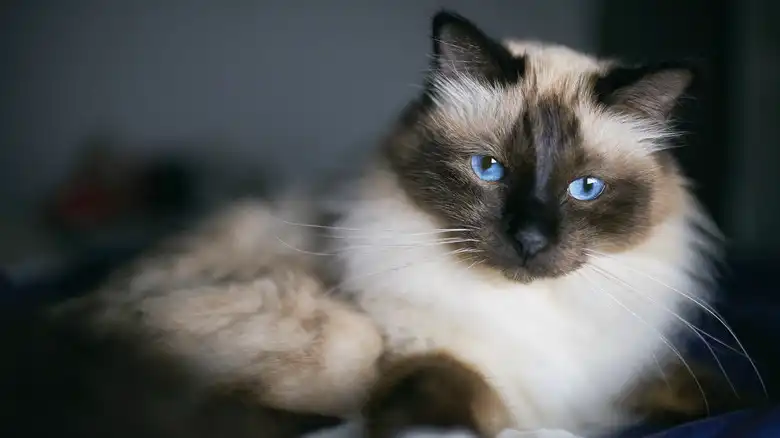
A Family-Friendly Cat Breed Known For Its Gorgeous Blue Eyes Is Also Easy To Train
CatsCat BreedsA Family-Friendly Cat Breed Known For Its Gorgeous Blue Eyes Is Also Easy To TrainByJessica DesrosiersFeb. 18, 2025 10:25 am ESTNico De Pasquale Photography/Getty ImagesWe may receive a commission on purchases made from links.If you're looking for a beautiful, intelligent, and easy-going cat breed, look no further than the Birman. Known widely as the "sacred cat of Burma," the country now known as Myanmar, this gorgeous cat breed's origins are wrapped in mystery. Intriguingly, some tales state that the breed is related to Burmese temple cats — an ancient companion of Burma's priests. Regardless of the Birman's exact origins, the breed is still popular today for its unique coat and its smarts. There have even been some Birman cat stars — most notably, Choupette, a Birman owned by the late fashion designer Karl Lagerfeld. And it's easy to see why so many love the Birman. Among this breed's most favorable traits are its easy trainability and desire to be around humans, which has long made people compare them to dogs.What does all of this mean? Well, the Birman is a cat breed with many characteristics that make them wonderful pets and family companions. With signature blue eyes, semi-long hair, and a soft coat that features color points on the ears, feet, and tail, they're sure to turn heads in any room. Birmans are also exceptionally friendly and laid-back, enjoying playtime and adventures with their owners, which goes all the way back to their loyal origins in Burma. Curiosity makes the Birman cat breed more trainableNico De Pasquale Photography/Getty ImagesSince they're so easy-going, Birmans make great pets for families with children and other pets in the house. They're known to be affectionate, friendly, and gentle — all signs that a cat has bonded with you — and this people-pleasing personality also makes them easy to train and helps strengthen their bond with their families.There's a lot you can teach Birmans who are eager to please, including training your cat to shake hands. Their inquisitive nature makes them want to be the center of any activity, but this can also land them in tricky situations. Without proper stimulation, Birman cats may make their own fun, playing with household objects or getting into other trouble. Essentially, they require extra mental and physical enrichment to keep their ever-active minds stimulated. Luckily, Birmans love to learn, and their naturally curious behavior is easily funneled into training exercises. If you own a Birman, consider working on a daily training routine. Clicker and target training are perfect for creating new behaviors and learning a whole host of tricks. Puzzle toys like the Trixie Cat Activity Brain Mover can also help keep the Birman's mind active and focused. No matter what, though, the Birman is a blue-eyed beauty that you'll love.
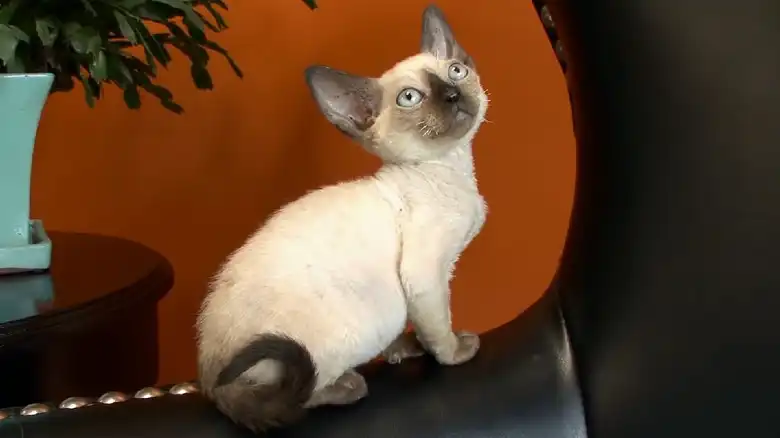
One Of The Rarest Cat Breeds Is A Short-Legged Feline That Gets Along With Everyone
CatsCat BreedsOne Of The Rarest Cat Breeds Is A Short-Legged Feline That Gets Along With EveryoneByCori ChapmanFeb. 23, 2025 11:25 am ESTAnimal Planet/YouTubeLooking for one of the rarest cat breeds? Look no further! With an appearance similar to that of Gollum from "Lord of the Rings" — except much cuter — the minskin is a nearly hairless breed with short little legs that you may have never heard of because they are so rare. However, they are known for being incredibly lovable cats.Minskins are a fairly new cat breed, originating in the late 90s. They were developed by Paul McSorley, who crossed the short-legged munchkin with a hairless sphynx cat. However, after five years, only 50 minskins existed — making the breed incredibly rare. Since the breed is only a couple of decades old, and the population so small, it is not yet recognized as an official breed by groups such as the Cat Fanciers' Association. In addition, the newness of the breed may create some additional issues — namely with their genetic background and the price of a kitten, costing into the thousands. However, if you're able to get your hands on one, you'll be rewarded with an adorable, loving cat.What you need to know before adopting a minskinminskin_kittens / InstagramMinskins are social, curious, and playful, making them great additions to the family. Though they are playful, they are also very calm cats. While minskins may make a great family pet, you should still be cautious with young children. Minskins are fragile due to their small stature, so children should be old enough to understand how to be gentle when holding them. The small legs and lack of fur on the minskin can also predispose them to some health issues such as joint issues and skin sensitivities. Minskins are also good with other pets. They specifically get along with dogs and other cats, but small pets like rodents should be avoided due to the cat's natural hunting instinct. As with any new pet, it's best to introduce them slowly to other animals no matter how friendly they are. Though minskins are rare, they seem to encompass everything that people look for when adopting a cat. If you're looking for an interesting, and relatively unknown breed, give the minskin a look.
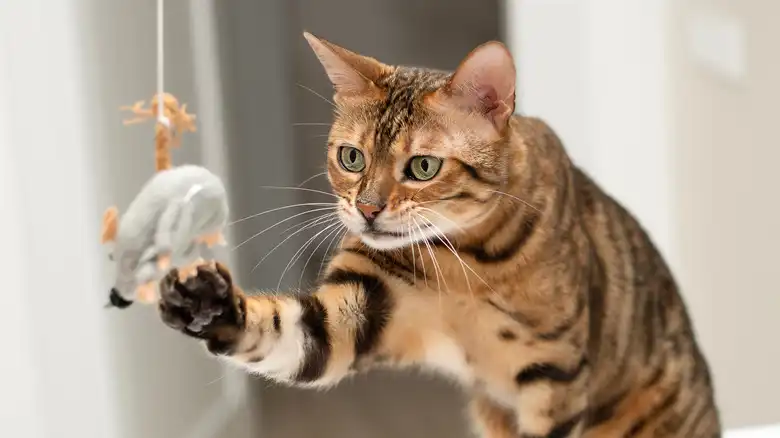
Bengals Are An Energetic Cat Breed Even Dog People Will Love
CatsCat BreedsBengals Are An Energetic Cat Breed Even Dog People Will LoveByCori ChapmanFeb. 25, 2025 9:25 am ESTketlit/ShutterstockWe may receive a commission on purchases made from links.The independent and chill manner of a cat may not appeal to dog people who prefer a pet with more energy, but Bengal rival the energy of a typical canine. Bengal cats are known for their leopard print-like appearance that stands out against the more common striped tabby pattern. Their personalities are also slightly more outgoing — with this breed enjoying play, cuddling, and even a game of fetch, making them one of the best cat breeds for dog lovers.Bengal cats are described as a confident breed with oodles of personality to share. They require more consistent stimulation than your average housecat; otherwise, they can develop behavioral issues. They get bored more easily, which can activate the mischief in them if left with no source of entertainment for too long. Additionally, they are incredibly intelligent, easily picking up on tricks. However, this intelligence and energy may make it impossible to deter them from getting into anything that is "off limits." Luckily, you can entertain your Bengal with a few toys and lots of love.How to keep your Bengal happySvetlana Rey/ShutterstockSince dog lovers typically want a more energetic pet, they may be a bit more equipped to handle a Bengal in the household as opposed to a cat person who mostly wants to cuddle with their fur baby. However, Bengals do get lonely, so when the humans are at work, it may be best to consider having another cat around so that your Bengal can have a consistent playmate. If you work from home, having plenty of toys on hand, such as Giociv's Interactive Cat Ball Toy, can keep them entertained between tasks.While Bengal cats need to be physically stimulated, they also require a lot of mental stimulation. Try out different "mind games" to enrich your cat's environment and keep them preoccupied. These games are typically treat-motivated. For example, leaving toys hidden around the house filled with tasty snacks can encourage foraging. There are also various cat puzzle toys available to buy, like the Catit Senses 2.0 Interactive Slow Feeder, that can keep them busy.When deciding on a pet to adopt, energy level and lifestyle are crucial to consider. If you want a more lowkey household, then a Bengal cat may not be the best choice. However, Bengals are ideal for those who prefer a more dog-like cat with plenty of energy to spare.
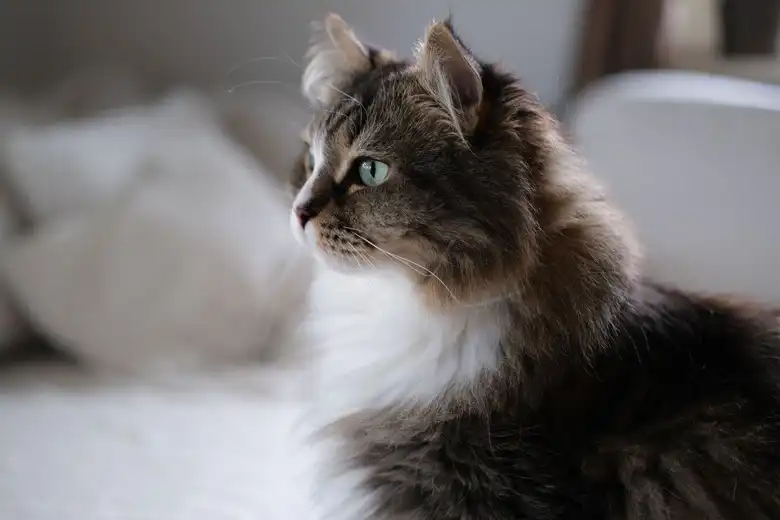
Siberian Cat Breed Characteristics
CatsCat BreedsSiberian Cat Breed CharacteristicsByKatherine MaloneNov 16, 2022 12:03 pm ESTWirestock/iStock/GettyImages #pc904c21ee1479d683f3f676e0f7a6d60, #pc904c21ee1479d683f3f676e0f7a6d60 img { aspect-ratio: 6240/4160; height: auto; } In This ArticleSiberian cat quick factsSiberian cat historySiberian cat personalitySiberian cat lifespan & health issuesSiberian cat grooming & careWelcoming a new catSiberian cat quick factsSiberian cat quick factsLength: 15 – 18 inchesWeight: 17 – 26 pounds, males tend to be larger than femalesLifespan: 11 – 18 years or moreCoat length: LongColoring: All colors and coat patterns including tortoiseshell and colorpointMore Like ThisCatsAmerican Wirehair Cat Breed CharacteristicsCatsBurmilla Cat Breed CharacteristicsCatsBalinese Cat Breed CharacteristicsGrooming needs: MediumFriendliness: Breed alone is not an accurate predictor of individual cats' personalities. However, Siberian cats are generally regarded as playful and affectionate.The Siberian cat is the national cat of Russia. They are medium to large, with long hair. While they have a long coat, the cats may be more hypoallergenic than other cat breeds. This can be beneficial if a family member is an allergy sufferer. Siberians are also known for their playful and affectionate nature. They have a calm demeanor and they don't tend to be overly demanding.Siberian kittens can take up to five years to reach their full size and maturity. Adult cats can be medium-sized but may also get quite large, weighing as much as 26 pounds. The breed standard puts more emphasis on the cat's muscular build and big bones over their exact weight.WITTY AQUARIAN / 500px/500px/GettyImages #e622882a3c4ab4c6589064a47248b857b, #e622882a3c4ab4c6589064a47248b857b img { display: block; aspect-ratio: 1.4774878118727Siberian cat historySiberian cat historyThe Siberian cat also called a Siberian forest cat or Moscow longhair is a Russian cat breed with references to the cats found as early as 1000 AD. They are included in many books including some Russian fairy tales and the 1889 book "Our Cats and All About Them" by Harrison Wier.The cats are native to Siberia in the forests of Russia. Despite the breed's long history, there is minimal documentation. It wasn't until the 1980s that more extensive records were kept in Russia.The Siberian cat breed was accepted into the International Cat Association in 1992 and received championship status in 1996. Siberians were first brought to the United States in 1990 by a cat breeder named Elizabeth Terrell. They were accepted into the Cat Fanciers' Association in 2000 where they later received championship status in the organization's cat shows in 2006.Siberian cat personalitySiberian cat personalitySiberian cats have wonderful personalities that make them a welcome addition to any home. They are affectionate and love to be with the family, including children and other pets. A Siberian cat may even follow you around as you move to different rooms. They love to cuddle when you are relaxing but they are far from being couch potatoes.The breed is very intelligent and playful. Take the time to play with your cat and enjoy the cat's antics as they jump and flip in pursuit of the toy. You should always make the game fun for your cat and let them "win" at chasing the toy. Be sure to avoid laser pointers — these can potentially injure and frustrate cats.You may also find your Siberian kitten or cat climbing bookcases and attempting to jump to high perches. Provide them with a cat tree and shelves to climb. These will give them more room to jump around and play.The Siberian cat breed is also sometimes recommended as a therapy or support animal. These cats tend to be easygoing and undemanding. They are willing to give affection and support when they sense emotional distress. The cats also communicate vocally. They have a soft meow and also often trill, chirp, and purr.Julia Gomina/iStock/GettyImages #eb90bdb97e25db8ee6985c2d5e2061a28, #eb90bdb97e25db8ee6985c2d5e2061a28 img { display: block; aspect-ratio: 1.499652052888Siberian cat lifespan & health issuesSiberian cat lifespan & health issuesHealthy Siberian cats tend to have a long lifespan and can live well into their teen years. As with many other cat breeds, they are at risk for hypertrophic cardiomyopathy (HCM). This is a type of heart disease that causes a thickening of the heart muscle. A veterinarian can check for this condition with echocardiography.Keep the Siberian up to date on all their vaccinations and have regular checkups with your veterinarian so that you can address any potential health problems right away.Siberian cat grooming & careSiberian cat grooming & careSiberian cats have long, thick coats that are water-resistant. They evolved to withstand the harsh winters of the Siberian forests. They have a triple coat with an undercoat, awn hairs, and guard hairs. You will see a ruff around the cat's neck and thick fur on the britches or hind legs. Some cats may have a lynx tipping on their ears.Fortunately, the coat of this long-haired breed doesn't tend to develop tangles and mats. Ideally, you should brush the cat at least once per week, making sure to comb the undercoat as well. When the Siberian cat is shedding their winter coat, they need daily brushing to remove loose fur. You don't need to bathe the cats, but the breed is dog-like in their love of water. Your cat may appreciate an occasional bath.While no cat is truly hypoallergenic, the Siberian cat breed may be less likely to trigger an allergic reaction compared to other cat breeds. This is likely due to the fact that Siberian cats produce less of the FelD1 protein which is an allergen in the cat's saliva and dander that may trigger a reaction in some individuals in some individuals.In addition to regular grooming, make sure to check and trim your cat's nails regularly. Clean the ears and brush their teeth with pet toothpaste. Feed them a high-quality, high-protein diet, preferably using canned food rather than dry food. Cats should also have constant access to fresh drinking water. Clean their litter box daily and change the litter regularly.Julia Gomina/iStock/GettyImages #e8dc37b75a67fda4dc5061d581d245417, #e8dc37b75a67fda4dc5061d581d245417 img { display: block; aspect-ratio: 1.5Welcoming a new cat into your homeWelcoming a new cat into your homeCat-proof your home before welcoming your new Siberian kitten to the family. Set up a single room with everything they need including a litter box, scratching post, cat tree, food, water, and toys. Make sure to close off any small spaces where the kitten may get stuck. Remove any plants or other objects that may be toxic or harmful to your new cat.Spend plenty of time with your new Siberian. Speak to them and offer to play but don't force them to be petted or held. Allow the cat to explore at their own pace and come to you for affection when they are ready. If you have other pets in the house, make the initial introduction through the door or baby gate. This will keep both animals safe and ensure a positive introduction.Always use positive reinforcement when interacting with your cat. As your cat gets comfortable with the room and with you, you can open the door and allow them access to more of the home. Be patient and before you know it, your new Siberian cat will be keeping you company — all around the house.ReferencesCat Fanciers' Association: About the SiberianThe International Cat Association: Siberian at a Glance
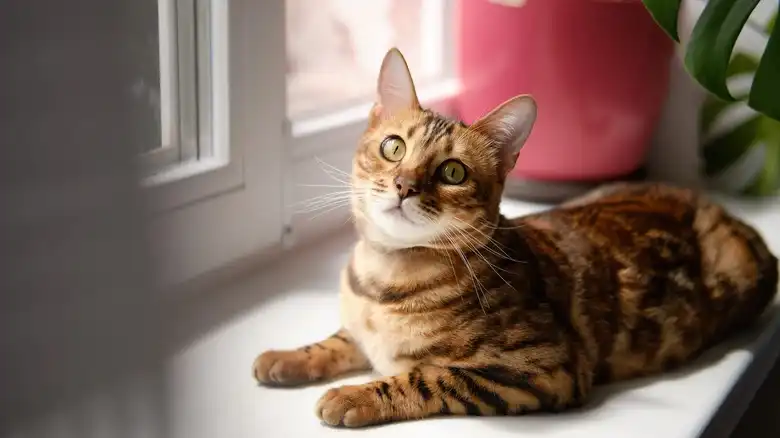
One Of The Most Stolen Cat Breeds Has Some Of The Rarest Features
CatsCat BreedsOne Of The Most Stolen Cat Breeds Has Some Of The Rarest FeaturesByCynthia AnayaJan. 28, 2025 9:25 am ESTeugenehill/ShutterstockIf you were to do an online search for cats available for adoption, you would probably find dozens within a 20-mile radius of your home. Expand your search area, and the number will multiply. With millions of felines available at shelters and in foster homes all over the United States, finding and learning how to adopt a cat is relatively easy, but unfortunately, some cats still get stolen. And naturally, certain breeds get stolen far more than others. Case in point, the Bengal has become a popular target for theft because of its rare rosette pattern and monetary value.The rosette pattern is more common in leopards and jaguars, as opposed to the more traditional tabby cats with striped or swirled coats or the tuxedo, tortoiseshell, and other patterns seen in domestic cats. On a Bengal cat, this pattern typically features spots with a black or dark-brown outer ring and a lighter color in the center. The ground (background) color of a Bengal cat can be brown, cream/ivory, light tan, light gray, dark gray, pale blue-gray, or even black. Because of its uncommon, exotic appearance and this breed being relatively rare, a full-bred Bengal kitten can cost thousands of dollars.How Bengal cats' features differ from other cats' featuresEnder Schist / FacebookThe rosette coat pattern is usually the first attribute everyone notices when they see a Bengal cat for the first time. However, that's only one of this breed's rare features, compared to standard domestic cats. This breed's head, eyes, ears, and build also stand out, with these rare features stemming from the cat's hybrid origins.Although many people assume Bengal cats are named after Bengal tigers, the breed actually gets its name from the scientific name of its wild ancestor, Felis bengalensis, more commonly known as the Asian leopard. Interestingly, the exact timeframe that this species was created is debated. Some say that breeders crossed wild Asian leopards with domestic felines in the late 1800s to create the hybrid Bengal, while others say the breeding didn't begin until the mid-1900s. Regardless, this is a relatively new breed of cat.The Asian leopard is a small wild cat breed, weighing only between 8 and 15 pounds, like most domestic cats. However, the Asian leopard's small, round head; large, golden eyes; rounded ears; muscular build; and long body are distinctive to this species. These traits mirror many Bengal cat breed characteristics due to their Asian leopard DNA.The most popular and rarest Bengal cat colorsNils Jacobi/ShutterstockAs if the existence of the Bengal cat weren't enticing enough, the breed features more than seven color combinations. The most common is the brown ground color with brown and black spots, a black-tipped tail, and green or gold eyes. Other varieties include the silver Bengal (gray and black colors), the snow mink and snow sepia Bengals (cream and tan colors), and the black Bengal (black and dark-gray colors).The rarest Bengal ground color is blue. No, it's not the same shade of blue as the sky; it's more of a pale blue or slate-blue shade of gray. The spots of a blue Bengal are a darker shade of these blue-gray colors, and the tail is dark gray, while the eyes can be hazel, green, or gold. Blue Bengal cats can cost anywhere from $3,000 to $5,000 due to their rarity.
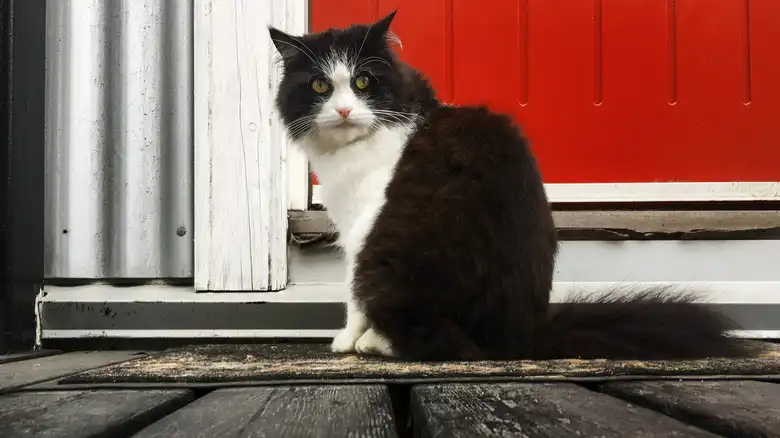
A Protective Cat Breed Known For Its Long Fur Can Growl Like A Dog
CatsCat BreedsA Protective Cat Breed Known For Its Long Fur Can Growl Like A DogByRosie GovinFeb. 8, 2025 9:25 am EST©fitopardo/Getty ImagesWhen you think of pets that guard you from intruders and neutralize threats, cats probably aren't the first to come to mind. Picture an animal that provides security. You're likely envisioning a dog from a protective breed. A big one. With big teeth, a loud bark, and a menacing growl they use to warn unfamiliar people that they mean business.But believe it or not, there's also a cat breed out there that growls for territorial and protective reasons. The Cymric, a long-haired variety of the Manx breed, is known for a lot of things, and growling like a dog when they feel threatened is one of them. The Cymric was originally bred as a mouser, so like many cats, they still have that propensity toward hunting. However, unlike many cats, the Cymric will growl and attack when they sense danger, and some have compared the sound of their growl to that of a dog.However, as long as Cymrics feel comfortable, they are quite even-keeled and playful cats. They're happy to learn tricks and will play games like fetch. With their penchant for getting territorial and feisty if frightened, you may be wondering if these intelligent felines can make good family cats in addition to being a protective breed.Are Cymric cats good with kids?Mr.Bije/ShutterstockCymrics display many of the typical Manx cat breed characteristics. They don't love when their personal space is invaded. They will growl and even swipe or attack if they feel scared enough. A Cymric might not be the first choice of cat for a family with kids, especially very little ones. However, Cymrics are generally social cats who like meeting people and are known to be affectionate. As long as they're not threatened, they're actually very laid-back.If your kids are old enough to be able to interact with your Cymric respectfully, these cats can make great pets for families with children. Another thing to consider with Cymrics is bringing a young kitten into the family. The more socialization at a younger age, the more tolerant they'll be of hugging and poking and prodding and other things little kids like to do to their pets. If you know about Manx cats, you'll know one distinct physical trait that Cymrics display is the lack of a tail. This can be a plus if you have young children who like to pull on things.Cymric cat careJeromeShao/ShutterstockCymrics are gorgeous long-haired cats, which means they require daily brushing. Other than that, they're fairly low maintenance. They're happy to play with toys, run around, and learn tricks, but they're not the most active cat breed out there. How much should you play with your cat each day? Well, that is dependent on your individual cat, but it's usually a good idea to play with your Cymric at least for a little while in the evening so everyone in the house will get a good night's sleep.They're also quite intelligent, which makes them fairly easy to train. They can learn to fetch and walk on a leash. These kitties are so smart that they will teach themselves how to open doors with their paws. Cymrics, like most cats, are master jumpers, but you can train them not to hop onto the counter and put their paws in your pizza.The Cymric is a generally healthy breed, but their lack of a tail can cause spinal problems. This includes a group of conditions called Manx syndrome. Manx syndrome includes spina bifida and spinal cord dysplasia that can lead to paralysis, incontinence, and infections. Your best bet for avoiding dealing with these problems is to buy a cat from a reputable breeder who will take care of any issues while their cats are still kittens.
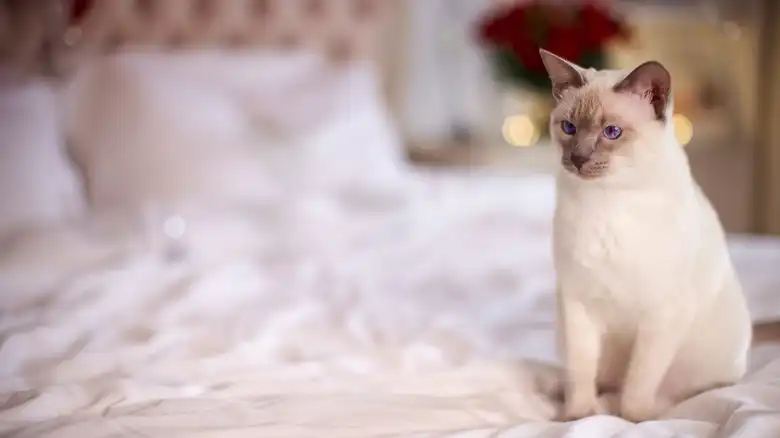
One Of The Rarest Cat Colors Is A Shade Of Purple You Might Not Have Seen Before
CatsCat BreedsOne Of The Rarest Cat Colors Is A Shade Of Purple You Might Not Have Seen BeforeBySanaphay RattanavongFeb. 13, 2025 9:25 am ESTAbelena/Getty ImagesWhen you think of cat colors, shades of brown, black, and white might come to mind. However, one of the rarest feline coat colors is the lilac coloration — a subtle, lavender-tinged hue that's as fascinating as it is beautiful. Lilac-colored felines are not entirely purple, but their pale brown hair has a unique undertone that gives off a soft lavender or pinkish sheen. Much like cats with the not often seen chinchilla coat, this striking appearance sets them apart in the feline world.The lilac hue is considered a rarity due to the specific genetic makeup required to produce it. Both parent felines must carry and pass on recessive genes that combine to create the delightful shade. Because of this, lilac cats are often the result of carefully planned domestic breeding, making their existence even more extraordinary.In addition to being visually unique, this lavender coloration also comes with a touch of exclusivity. Seen in breeds such as the vocal Siamese, adorable Persian, and colorpoint shorthair (a crossbreed of the Siamese and American shorthair), lilac-colored cats embody a blend of elegance and genetic alchemy.The science behind purple catsEvgenii Predybailo/ShutterstockThe soft, silvery-lavender coat known as lilac in cats is the result of a precise genetic combination. Several genes influence this feline coat color:B(black), its recessive counterpartb(chocolate), andd(dilution). To achieve the lilac shade, a cat must inherit two copies of both the chocolate gene (b/b) and the dilution gene (d/d), making this trait a product of two recessive genes working together. The chocolate gene modifies the black pigment resulting in a rich, warm brown tone. When the cat also carries the dilution gene, this chocolate base is lightened even further, producing the distinctive whisper-soft lilac color. Essentially, lilac is a diluted form of chocolate, which in turn is a lighter version of black. Lilac-colored cats appear in several breeds. Solid lilac coats — characterized by an even, pale lavender hue — are seen in breeds like the British Shorthair and Burmese. The lilac point pattern, found in Siamese and colorpoint shorthair cats, highlights their ears, paws, and tails with soft lilac accents. Beyond these common patterns, the Thai Lilac, a rare variation of the Korat breed, stands out with its stunning bluish-lavender coat and striking green eyes.Each of these breeds brings its own charm to the lilac color, and their rarity makes them even more sought after by cat enthusiasts. If you're curious about your own cat's genetic makeup, to see if they carry any of these genes, consider exploring a cat DNA test to learn more about their lineage and potential coat colors.The history of the lilac coat in felinesoatawa/ShutterstockThe journey of lilac-colored cats to their current status as sought-after companions is steeped in history and meticulous breeding efforts. However, this rare coloration did not gain widespread recognition from the start, as evident in the first officially recognized species of lilac-color cat: the Lilac Point Siamese. Originating from Thailand, Lilac Points first gained recognition in the 1800s. They were initially dismissed as inferior variations of blue points. Luckily, they were officially acknowledged as a distinct color in the United States in 1955 and in Europe by 1960. Breeders played a crucial role in this transformation, crossing Siamese cats with Russian Blues to achieve the desired genetic traits.Over time, lilac-colored cats clawed their way into the limelight to become symbols of elegance and exclusivity. In particular, the Persian breed's solid lilac coat and the delicate lilac points of the Siamese made them favorites among feline enthusiasts. These cats were prized not only for their beauty but also for their affectionate and social personalities, adding to their appeal as pets. The rarity and striking appearance of lilac-colored cats continue to make them highly sought after. They're sure to take a place in any cat lover's heart.
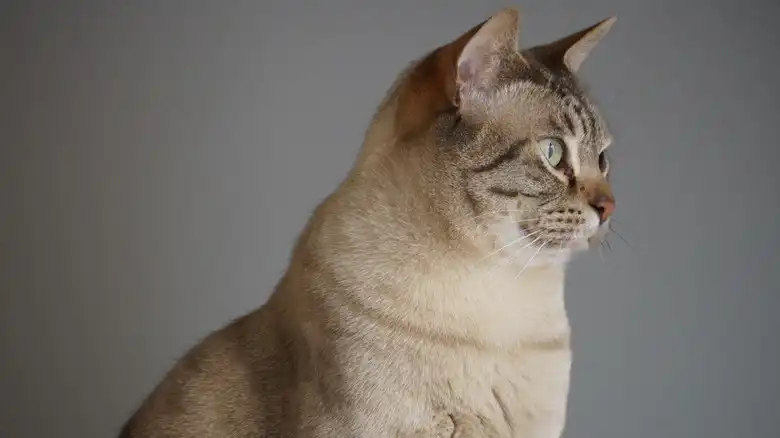
An Underrated Australian Cat Breed Is Also One Of The Most Loyal (And Perfect For Families)
CatsCat BreedsAn Underrated Australian Cat Breed Is Also One Of The Most Loyal (And Perfect For Families)ByRosie GovinFeb. 3, 2025 3:25 pm ESTAtsunori Kikuchi/ShutterstockWhat do Stephen King and Australian cat breeds have in common? They both embrace the mist. Indeed, the Australian mist is a cat breed that may have gotten caught in the haze — it's an underrated cutie that not enough potential pet parents consider when searching for a family-friendly cat. What type of cat is best to have around kids? The answer might just be the Australian mist.There are several reasons the Australian mist has flown under the radar. First, it is a relatively new cat breed. It has only been around since 1977, and its name is even newer than that. This fluffy kitty was originally called the spotted mist thanks to its lightly spotted coat. However, as the breed developed and other coat patterns began to emerge, its name was changed to Australian mist in 1998. Created by Australian veterinarian Dr. Truda Straede, it took 25 years to fully develop the breed. The Australian mist is a combination of several well-known cat breeds, including Abyssinians, domestic spotted tabbies, and European Burmese breeds.This mix of friendly, playful breeds means the Australian mist has some European Burmese cat breed characteristics as well as Abyssinian and tabby traits. In short, they are happy, loyal companions for adults and kids alike. They are quite common in Australia but are gaining popularity around the world since they have proven to be excellent pets.Australian mist characteristicsAtsunori Kikuchi/ShutterstockAustralian mists are medium-large sized cats with broad heads, large eyes, and rounded ears. Their short, spotted or marbled coats come in several colors including shades of brown, blue, and lilac, much like their Burmese cousins. Aside from being absolutely adorable, they are known for being lively, easygoing, loyal, affectionate, and family-friendly pets. If you're looking for a lower-energy and loving cat, this newer breed is a great pick. Australian mist kittens are more active than the adults, who'd much rather lounge on their owners' laps. They are also easy to train and can even play fetch, but much like lots of us humans, they prefer to be cuddled up with their family.Australian mists are great with young children and even other animals as they are quite laid-back and generally comfortable with being touched and held. In short, the Australian mist is a wonderful pet for any type of pet owner. Whether you have babies and dogs running all over your house or you live alone in an apartment, the Australian mist is adaptable and happy to simply hang with their people.Caring for an Australian mist catAtsunori Kikuchi/ShutterstockAustralian mists don't require any special care. You may be wondering: should I brush my cat? With the Australian mist's short coat, it's generally all right to give them a weekly brushing. It's important to be aware that Australian mists are prone to gaining too much weight if they overeat. At their ideal size, they weigh somewhere between 8 and 15 pounds, so your Australian mist's perfect weight will be unique to them.As the Australian mist is newer on the scene — and a combination of several breeds including pedigree and domestic cats — there aren't any particular genetic or health risks associated with them. Like all cats, they are at risk for common heart diseases in cats like hypertrophic cardiomyopathy, so this is something that cat owners should screen for.Not only are their personalities genial and mellow, but Australian mist care also isn't complicated. If anything, they require a little more attention and snuggling than some other, more traditionally independent cat breeds, but what's bad about that? Purebred Australian mists aren't likely to be found at your local animal shelter, so if you're interested in buying one, you'll have to contact a reputable breeder.
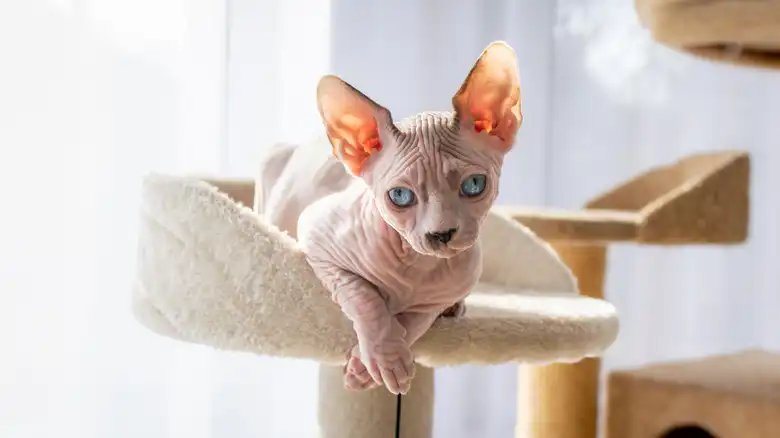
The Cat Breed With The Shortest Lifespan Is Also Known For Its 'Peach Fuzz' Fur
CatsCat BreedsThe Cat Breed With The Shortest Lifespan Is Also Known For Its 'Peach Fuzz' FurByCori ChapmanFeb. 22, 2025 11:25 am ESTRenato Horvath / 500px/Getty ImagesHairless cat breeds are absolutely adorable. However, if you're considering adopting a furless feline for their hypoallergenic properties and general cuteness in a sweater, you may want to hold that thought to delay the worst part of pet ownership: saying goodbye. Normally, domestic cats can live for up to approximately 18 years, however, the Sphynx cat, a popular hairless breed, actually lives the shortest. The Journal of Feline Medicine and Surgery published a 2024 study on the lifespans of various breeds, including Sphynx cats, using sample populations of cats living in the U.K. The average cat lived around 11.74 years, with the Burmese and Birman breeds living the longest on average at 14.42 years — and the Sphynx the shortest at 6.8 years. This breed has one of the lowest life expectancies, so it may make you think twice about adopting one of these hairless treasures. However, it may also have you wondering why this is the case.Why do Sphynx cats live such short lives?By Wunderfool/Getty ImagesThe breed's origins trace back to Ontario, Canada in 1966 with a hairless male kitten, Prune, who was born with the hairless mutation. The gene was found to be recessive, helping to develop the breed through selective breeding. However, this hairlessness is also what contributes to the sphynx's short life. While sphynx cats do have a small amount of "peach fuzz" fur, they lack the benefits that come from having a full coat. A cat's fur helps with temperature regulation as well as protecting against harmful UV rays. A hairless cat can more easily get sunburned and is more susceptible to skin cancers. This is often why cat parents purchase little sweaters for their hairless wonder. Sphynx cats are also predisposed to certain diseases that contribute to a shorter lifespan. The same U.K. study found that "approximately 65% of Sphynx cats aged over 4 years were diagnosed with at least one heart condition." Aside from being genetically predisposed to heart conditions, dental and skin disorders are also common. Despite this, the Sphynx cat is still a loving, sweet cat that makes for a great companion. Proper veterinary care and attention can help ensure your cat lives as long as possible.